
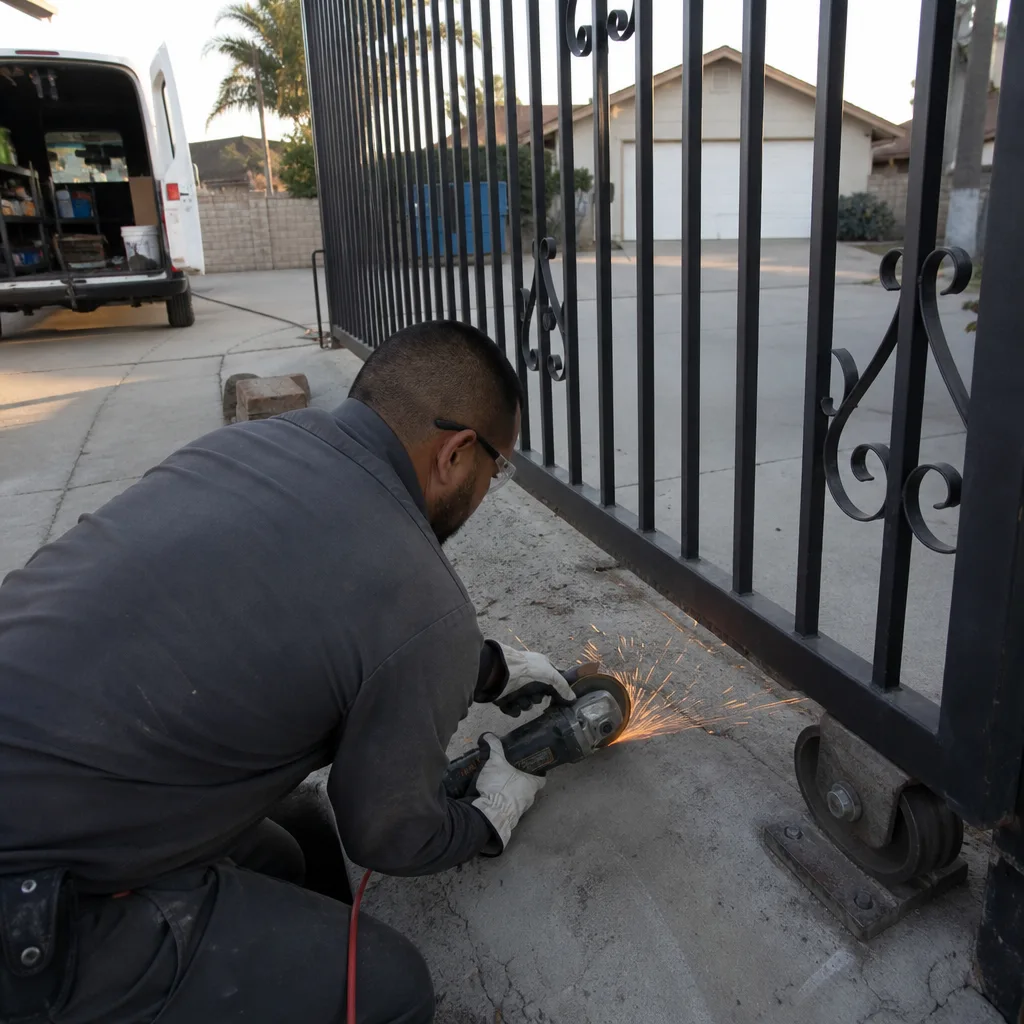
Last updated November 2, 2026
 Wrought iron
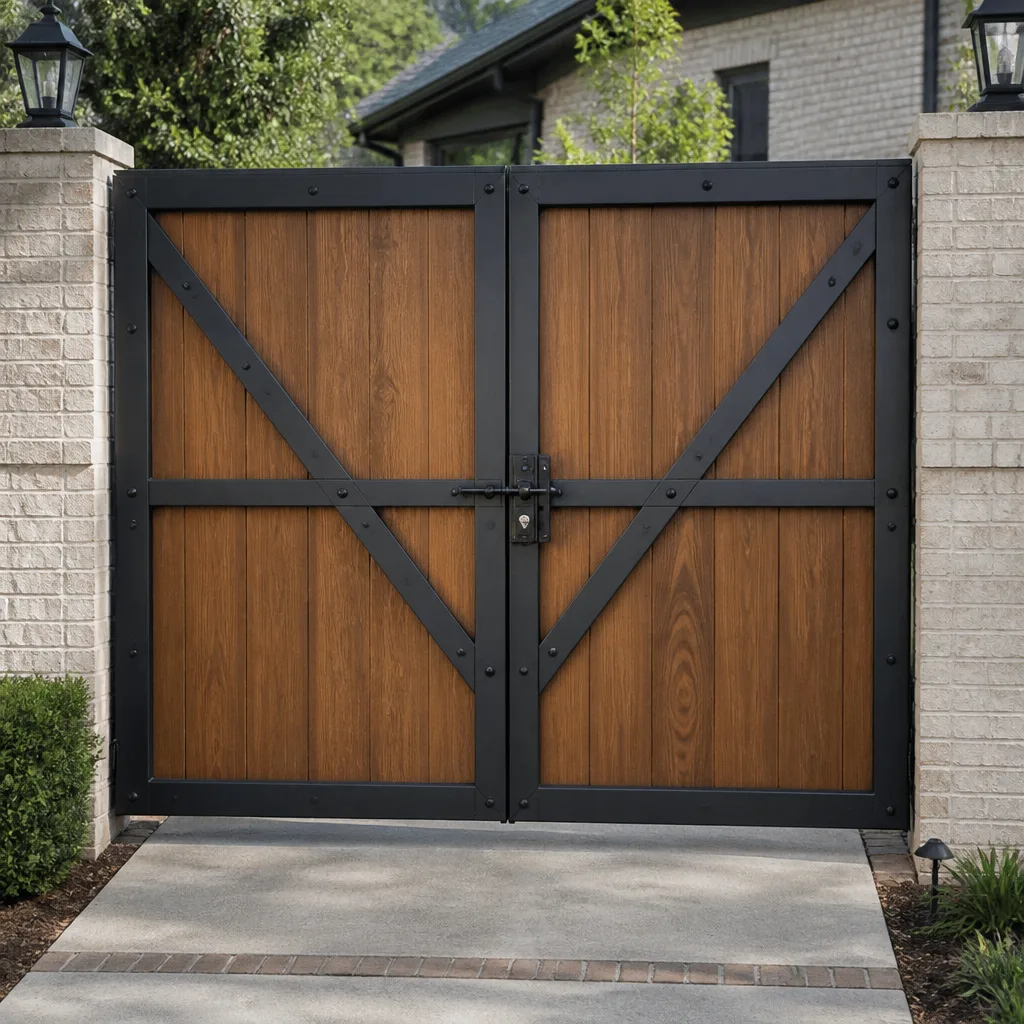 Wood & steel frame
 Farm & ranch
 Sliding driveway gates
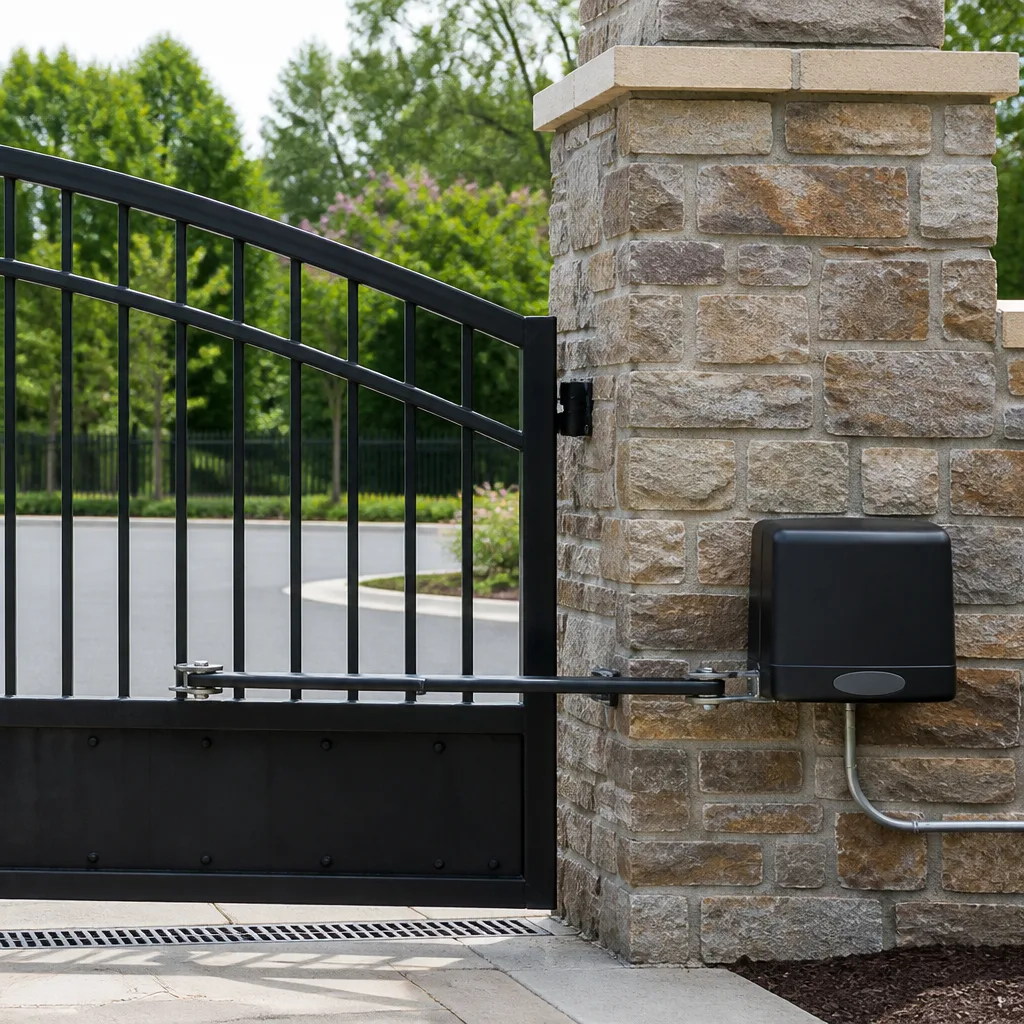 LiftMaster operators
Free on-site gate assessment - hinges, posts, and your LiftMaster or Nice gate operator checked before anything is quoted
The assessment is free and the quote is the invoice.
Get your free estimateDIY vs Professional Gate Repair: The Oxnard Homeowner’s Decision Guide
The most expensive gate repair in Oxnard is the one done twice. Homeowners who tear into an automatic gate operator without knowing the specific control board, force profile, or entrapment protection requirements usually end up with a bigger problem than they started with: a burned-out motor, a voided warranty, and sometimes a gate that closes on a car, a kid, or a delivery driver. This guide walks through what is genuinely safe to fix yourself, what carries hidden liability, and where the line actually is. For more detail on pricing, see our Gate Repair Cost Breakdown: The Oxnard Homeowner’s Reference for 2026. You’ll learn which specific tasks make sense as DIY in Oxnard and which ones are better left to a technician who works on your brand every week.
Quick Answer
Most Oxnard homeowners can safely handle a small set of gate repairs: remote programming, battery swaps, photo eye cleaning, and basic hinge lubrication. Everything involving wiring, operator replacement, force settings, or entrapment protection carries real risk, because California code and UL 325 safety standards apply the moment you touch an automated gate. A wrong fix often costs more than the original repair, which is why we recommend DIY for the small stuff and our Gate Repair services for the rest.
Styles & brands we work with
- Wrought iron
- Wood & steel frame
- Farm & ranch
- Sliding driveway gates
- LiftMaster operators
Table of Contents
- What Is Safely DIY on a Gate
- What Carries Real Risk
- Why UL 325 Matters More in California
- The Hidden Costs of a Wrong DIY Repair
- Brand-Specific DIY Difficulty
- When the Real Problem Is the Diagnostic, Not the Tool
- Oxnard Climate Factors on Gate Hardware
- A Step-by-Step DIY Checklist Before You Start
What Is Safely DIY on a Gate
Let’s be clear about what actually falls into the safe category. These are tasks where you cannot hurt yourself, cannot hurt the gate, and cannot create a safety hazard for anyone else. If you’re in Oxnard and your gate remote stopped working, there’s a good chance the problem is a three-dollar battery, not the operator.
The tasks we’d tell our own neighbors to handle themselves:
- Remote control battery replacement. Open the case, swap the battery, test it. Takes two minutes.
- Remote reprogramming. Most Mighty Mule, Ghost Controls, and LiftMaster remotes have a learn button on the control board. Press and hold, press the remote, done.
- Photo eye alignment. If the gate reverses immediately or won’t close, one of the sensors may have been bumped. Loosen the bracket, point the sensors at each other until the indicator light turns solid, tighten.
- Manual release operation. Every automated gate has a manual release mechanism. Knowing where yours is and how to operate it means you can open and close the gate by hand during a power outage. That’s useful in Oxnard when coastal winds knock out power.
- Track and wheel cleaning. Slide gates collect sand, salt, and debris. Clearing the track and cleaning the wheels is simple and prevents premature wear.
- Hinge and wheel lubrication. Use white lithium grease on metal hinges and a silicone spray on plastic wheels or rollers. Don’t use WD-40 as a long-term solution; it attracts dirt.
These tasks share one trait: none of them change how the gate physically operates. The motor settings, force limits, and safety sensors stay exactly as the installer left them. That’s why they’re safe.
If you’re based in Oxnard, especially near the beach corridor along Harbor Boulevard or up in the newer developments off Rice Avenue, salt air is an ongoing factor. Lubrication is something you’ll do more often than a homeowner inland.
What Carries Real Risk
The moment you open the operator housing and start touching circuit boards, wiring, or motor assemblies, you’ve crossed into different territory. We’re not saying a homeowner can’t do these things. We’re saying the risk profile changes completely, and most people don’t realize how much they’re taking on until something goes wrong.
Tasks that carry real risk:
- Replacing or relocating a limit switch. The limit switch tells the gate exactly where to stop at open and full close. Set it half an inch wrong on a slide gate and the gate over-travels, stripping the gear rack or bending the frame.
- Rewiring the control board. A modern LiftMaster or BFT control board has terminals for the motor, the transformer, the photo eyes, the edge sensor, the keypad, and often a vehicle detector loop. Reversing two wires or leaving a loose connection can short the board. A replacement board runs $200 to $500, and that’s before labor.
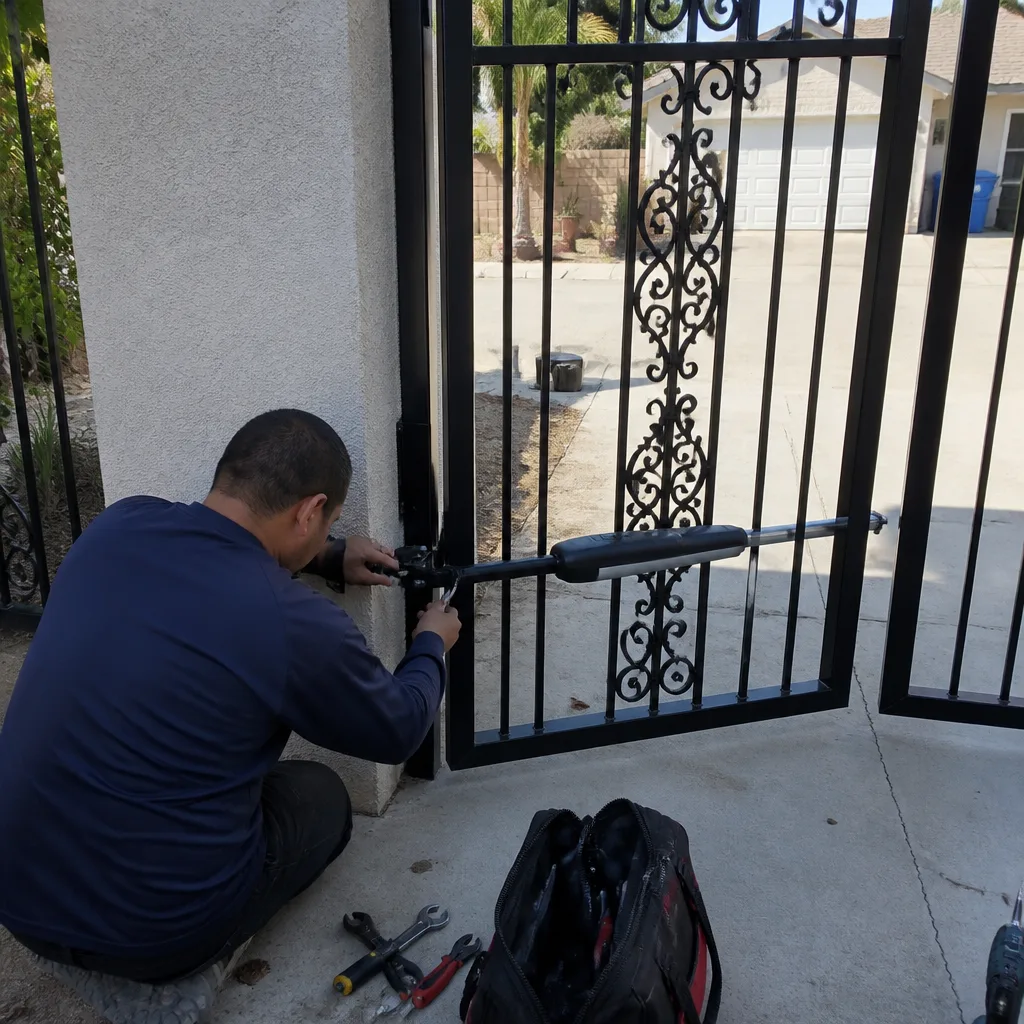
- Replacing the operator arm or piston. On a swing gate, the operator is fighting the full weight and wind load of the gate leaf. Mixing an operator from one brand with a gate from a different setup changes the geometry, and the result is often a broken weld, a bent hinge, or an operator that burns out in a year.
- Spring and counterweight adjustments. Gate springs under tension store serious energy. If a DIY adjustment lets go, the result can be hundreds of pounds of force released at once. That’s a finger breaker, or worse.
- Entrapment protection replacement. This is the big one, and we covered it in the opening. When an operator is replaced, the entrapment protection must be re-matched to the new operator’s force and speed profile. Skip this and you have a gate that can crush a person or a pet. No one ever thinks it will happen until it does.
If any of these tasks is on your list, you can still handle the prep work. Clear the area, remove obstructions, make notes on what you see. Then call someone who does this every day.
Why UL 325 Matters More in California
UL 325 is a national safety standard for automatic gate operators, but it is enforced with particular weight in California. The standard requires any automated gate installed after 2001 to include at least two independent entrapment protection mechanisms, such as photo eyes and a reverse-on-contact edge. California code treats gate operators as life-safety equipment, not convenience hardware.
What this means for a DIY project: if you pick up a new gate operator from a big-box store in Oxnard and install it yourself, you are legally responsible for bringing that installation into UL 325 compliance. That means correct force settings, properly mounted sensors, accurate warning signage, and verification that the gate reverses when it encounters obstruction. Most homeowners don’t know this exists, let alone how to test for it.
We see the evidence regularly. In our experience, a homeowner installs a new Mighty Mule or Ghost Controls operator, the gate works fine, and everything feels normal. Then a child or a pet brushes against the closing edge, and the gate doesn’t reverse because the force sensitivity was never set correctly. The operator did its job; the installation didn’t.
Professional installation is not about knowing how to bolt things to a post. It’s about knowing what has to happen afterward: the setup of force limits, the verification of photo eye alignment under full travel, and the setting of the reverse-on-contact threshold. Those steps take experience and a force gauge, not a socket set.
Oxnard properties, especially ranchettes east of the 101 and equestrian parcels in El Rio, often have larger gates with longer travel and more powerful operators. Those systems require even more careful tuning because the potential force at the edge is higher.
The Hidden Costs of a Wrong DIY Repair
The DIY math usually starts with the price of the part. A homeowner sees a new operator online for $600 and compares it to a professional quote of $1,800, and the decision looks obvious. But the math changes fast when things go sideways.
- Voided warranty. Most operator manufacturers talk about warranty coverage on the box, but the fine print often excludes self-installed units or any unit that wasn’t installed by a licensed contractor. If a self-installed Faac operator fails in month six, the manufacturer can deny the claim, and the homeowner is out the cost of the unit plus a new one.
- Secondary damage. A poorly set limit switch on a slide gate doesn’t just stop the gate in the wrong place. It over-travels, and the force of the motor drives the gate into the end post. That bends the gate frame, cracks the post, or strips the rack. The operator survived; the gate didn’t.
- Diagnostic replacement. This is the expensive one. A homeowner replaces the control board because the gate stopped working, and the gate still doesn’t work. Then they replace the sensors. Still nothing. Then they call us, and we find the real cause: a melted terminal on the transformer or a shorted wire underground. The homeowner has already spent $500 on parts that weren’t bad and now pays for the real repair on top.
- Undo and redo. If the DIY fix is wrong enough, a professional has to remove the homeowner’s work before doing the real repair. That’s double labor. We’ve seen operators wired backward, sensors mounted 90 degrees off, and control boards fried by reversed polarity. The redo costs more than the original repair would have.
None of this is to say every DIY gate job ends in disaster. But the risk isn’t the first attempt; it’s the unknown unknowns. The homeowner doesn’t know what they don’t know, and in gate automation, what they don’t know is usually what generates the invoice.
Brand-Specific DIY Difficulty
Not all gate operators are equal when it comes to DIY-friendliness. The gap is real, and Oxnard homeowners who don’t recognize it end up in over their heads. Here’s the blunt breakdown.
Mighty Mule is genuinely built for homeowner installation. The manuals are written for a non-technical audience, the wiring is simplified, and the app walks you through setup. If someone is going to successfully self-install a gate operator, it’s probably a Mighty Mule. The trade-off is that Mighty Mule units are not designed for heavy or frequent cycling. They work great on a residential driveway gate that cycles ten times a day; they don’t hold up on a 30-unit complex.
LiftMaster sits in the middle. The brand covers everything from residential swing operators to full commercial slide and barrier systems. A handy homeowner can often handle a LiftMaster residential unit with time and patience, but the commercial side is a different animal entirely. The wiring, the logic settings, and the vehicle detectors require training.
FAAC and BFT are professional-grade European operators. They are excellent equipment, and they are not designed for the weekend installer. The manuals assume electrical knowledge, the control boards are dense, and the force setup usually requires specialized testing. A FAAC gate that has been self-installed and set up wrong can behave unpredictably in wind, exactly the kind of weather Oxnard gets off the coast.
We’ve worked on every one of these brands, and the pattern is consistent: homeowner-installed Mighty Mule units usually work for a while. Homeowner-installed FAAC and BFT units usually need correction. That’s not a knock on the brands; it’s an honest read on how they’re engineered.
If you’re comparing brands for a new install, our guide to gate installation in Oxnard covers what we see working best on Oxnard soil and coastal conditions.
When the Real Problem Is the Diagnostic, Not the Tool
Here’s the part most DIY guides skip. There’s a class of gate problems where the fix itself is mechanically simple, but figuring out what’s broken requires equipment a homeowner doesn’t have. And without that diagnostic, every attempted fix is just a guess.
- Intermittent motor failure. The gate works fine for three days, then stops. A technician checks the motor windings and the capacitor with a multimeter to see if the motor is dying or the problem is elsewhere. A homeowner replaces the motor because it’s the biggest thing in the box, and the gate still fails intermittently because the real issue was a worn relay on the control board.
- Underground wire faults. An Oxnard lawn with automatic irrigation can hide a broken or shorted wire six inches under the surface. Finding it takes a wire tracker or a time-domain reflectometer. Digging blindly through the yard doesn’t find a short; it just tears up grass.
- Capacitor testing. A bad capacitor makes a gate motor hum but not start. Testing it takes a multimeter, and it has to be done safely because capacitors store a charge. This is a $25 part and a $5 diagnostic tool, but it’s not worth getting shocked over.
- Loop detector calibration. If a gate opens but won’t close after a car passes, the vehicle loop detector may be mis-calibrated. Adjusting it takes a loop tester and experience with inductance settings. Most homeowners don’t even know where the loop detector is.
The point isn’t that these repairs are impossible to learn. It’s that the learning curve is the expensive part. A professional has already made these mistakes on somebody else’s gate, years ago. You’d be paying to make them on yours.
Oxnard Climate Factors on Gate Hardware
Oxnard’s climate is one of the most corrosive in California for gate hardware, and it shapes the DIY-vs-professional decision in ways specific to this city. The combination of salt air, coastal moisture, and sandy wind means cheap hardware fails faster here than inland.
Three Oxnard-specific factors we see consistently:
- Salt air corrosion on control boards. The Terminus Avenue industrial area, the homes near Silver Strand and Hollywood Beach, anything within a mile of the ocean, the circuit boards in those gates have a shorter life. Moisture plus salt equals corrosion on terminals and solder joints. A gate that’s been working for five years can suddenly start behaving erratically because a ground terminal has rotted. An Oxnard homeowner might clean the terminal and think they fixed it, but the corrosion has usually crept into the wire itself.
- Sand and grit in slide tracks. Wind off the Pacific picks up beach sand and deposits it everywhere. Slide gate tracks and wheels fill up with grit, which accelerates wear on wheels and racks. This is a maintenance issue, not a repair issue, but most homeowners don’t know about it until the gate starts grinding.
- Wind load on large gates. Oxnard gets real wind, especially in the afternoons. A 16-foot steel gate acts as a giant sail. Operators that are underpowered for the wind load fail early, and gates that aren’t balanced properly put constant strain on the operator’s limit switches. This is why operator selection and torque setup matter more in Oxnard than in, say, Bakersfield.
The climate angle also matters for repair timing. Waiting six weeks to fix a gate that’s been corroding for a year usually means the difference between a $200 sensor replacement and a $900 board replacement.
A Step-by-Step DIY Checklist Before You Start
If you’ve decided a task is worth attempting, run through this checklist first. It saves people from the most common self-inflicted problems we see in Oxnard.
- Disconnect power at the breaker. Not just the operator switch. Kill the breaker. Then test the gate by hand to confirm there’s no residual power. A surprising number of gates have an additional battery backup that keeps the operator live even when the breaker is off.
- Photograph everything before you touch it. Wire connections, spring positions, bracket placements, limit switch settings. Phone photos are free, and they’re the only reliable way to reassemble something exactly as it was. We’ve helped homeowners rebuild gates from photos when the alternative was a full rewire.
- Label every wire before disconnecting it. Masking tape and a marker. If you can’t identify the wire, don’t pull it. A mislabeled control board connection is the number one cause of the classic DIY scenario: “I put it back exactly the way it was, and now it doesn’t work at all.”
- Check the manual for your specific model. The manual for a Mighty Mule MM572W is not the same as the manual for a Ghost Controls TSS1. Different learn buttons, different force adjustments, different wiring layouts. Download the PDF from the manufacturer’s site if you don’t have the original.
- Test entrapment protection after any electrical change. Place an obstruction in the gate’s path and confirm it reverses. If it doesn’t reverse, stop and call a professional. This single step is the difference between a successful DIY job and a lawsuit waiting to happen.
- Be honest if you’re over your head. There’s no shame in calling someone. The shame is in a $400 part installed incorrectly, followed by a $1,200 repair to undo the work and fix the original problem.
Common Mistakes to Avoid
- Using the wrong lubricant. A homeowner sprays WD-40 on plastic wheels and thinks they’ve lubricated the gate. WD-40 is a solvent and water displacer; it will strip the plastic’s lubricant film and accelerate wear. Use white lithium grease on metal and silicone spray on plastic.
- Reusing old wiring for a new operator. The existing cable might be undersized for the new operator’s amp draw, especially if the new unit is more powerful. Running a new operator on thin old wire burns up the transformer or the board.
- Ignoring the manual release. Not knowing where the manual release is means being locked out of your own property during a power outage. Every gate operator has one. Learn where yours is before you ever need it.
- Installing a new operator on a broken gate. If the gate itself is out of square, rusted, or sagging, a new operator will fight a bad structure and fail early. The gate structure has to be sound before the automation goes on it.
- Setting force too high as a workaround. If the gate struggles to close, the homeowner turns up the force limit until it “just works.” That’s how you create a pinch hazard. The correct fix is finding the source of the resistance, not overpowering it.
- Skipping the warning signs. UL 325 requires specific warning signage on automated gates. It’s not optional, and skipping it won’t save a meaningful amount of money. It will create liability if someone is injured.
See the difference
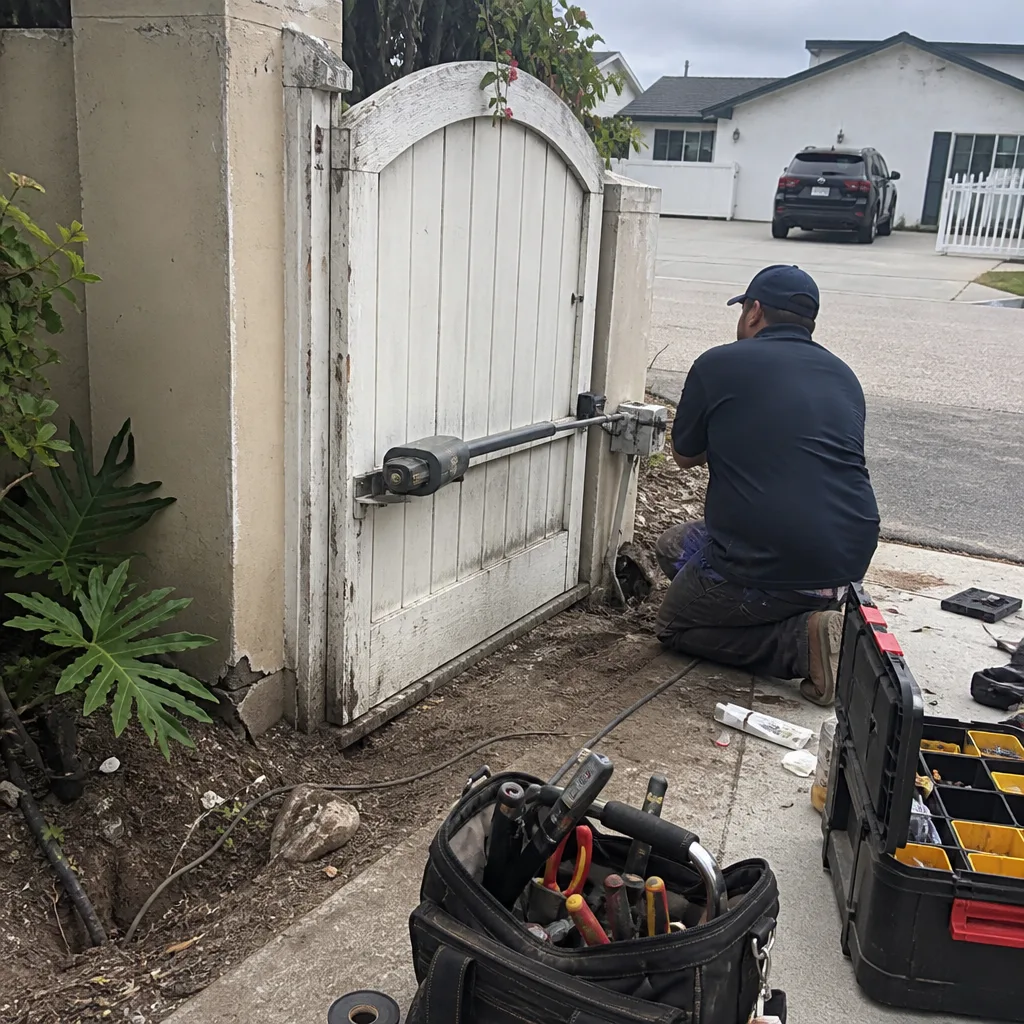 Before
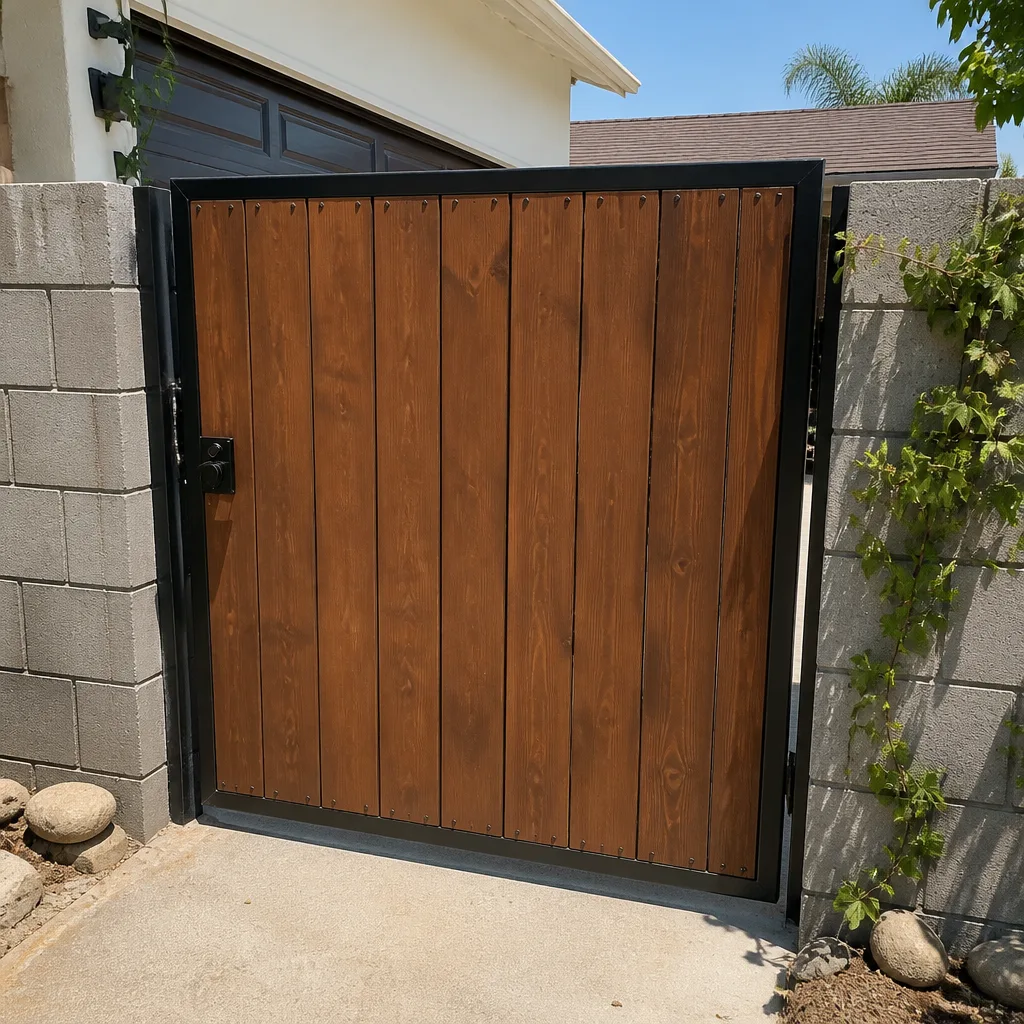 After
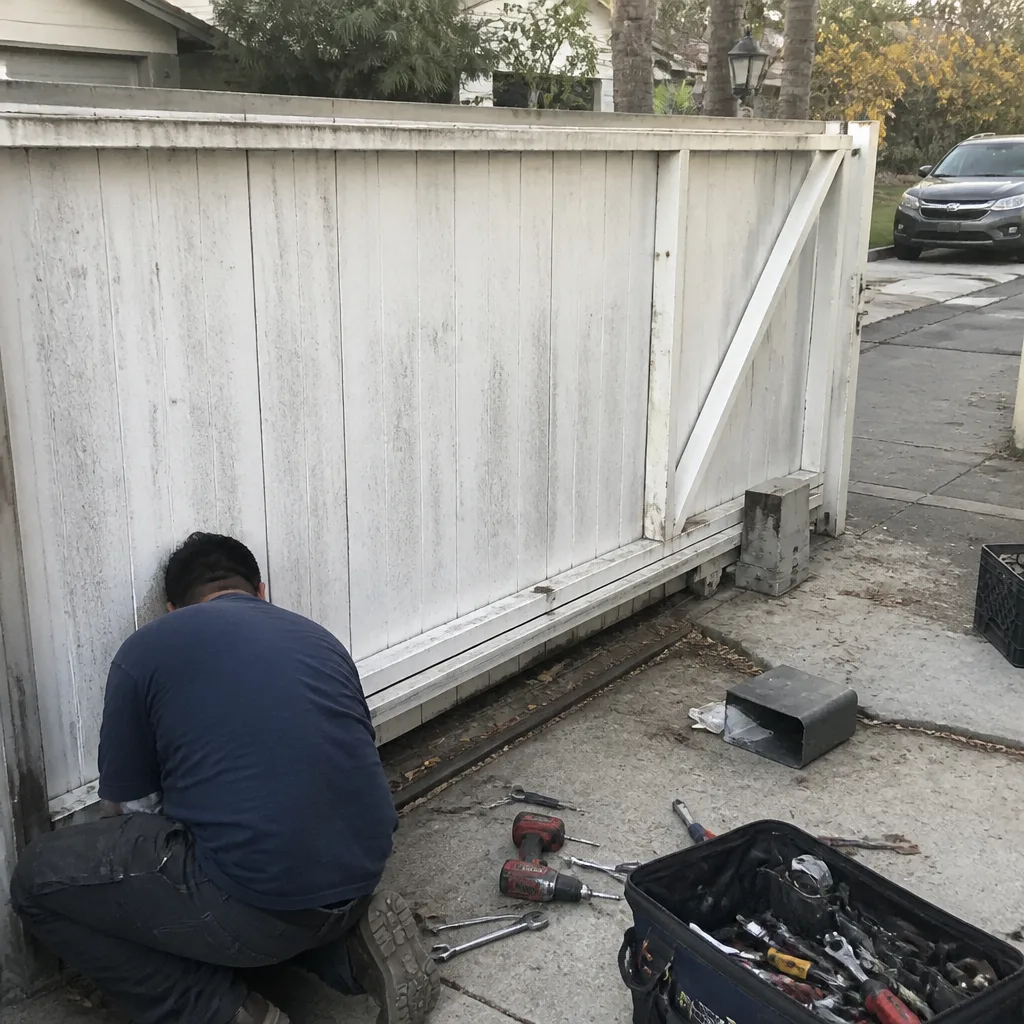 Before
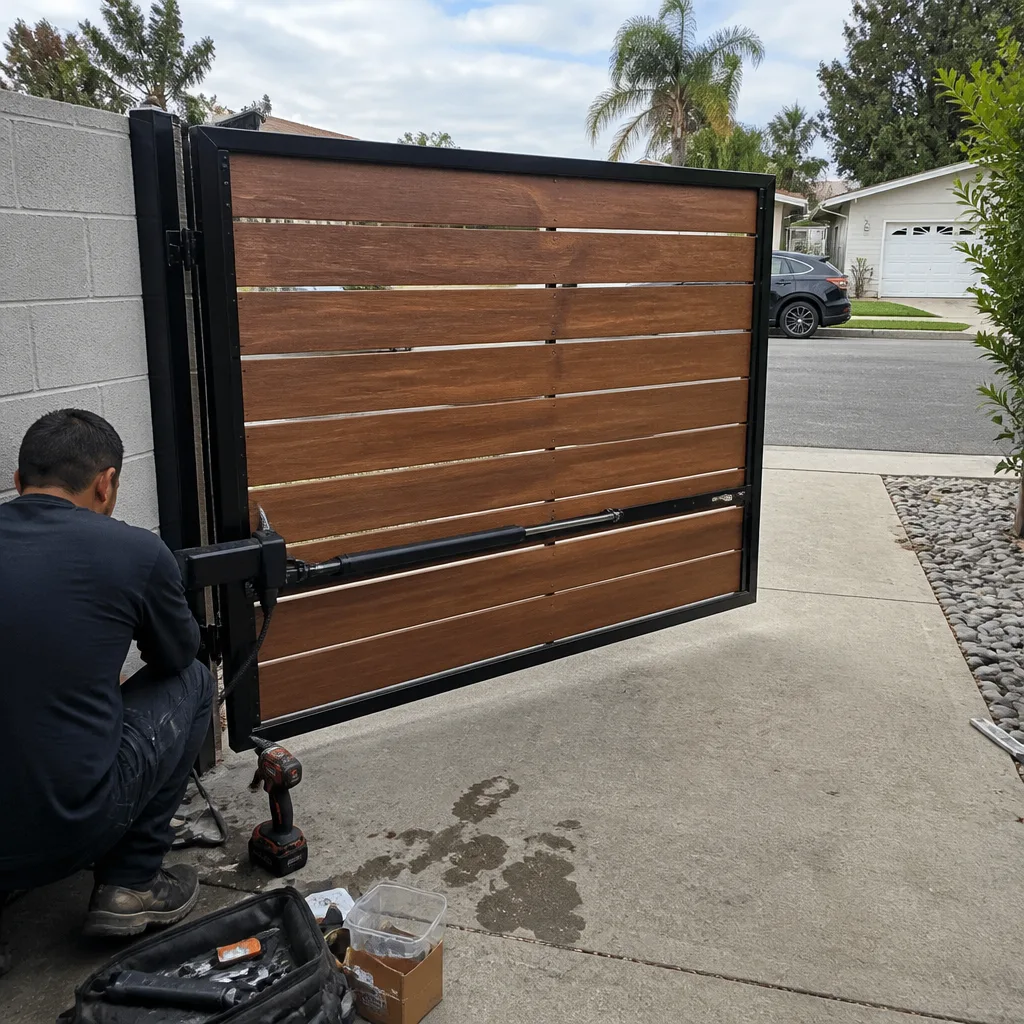 After
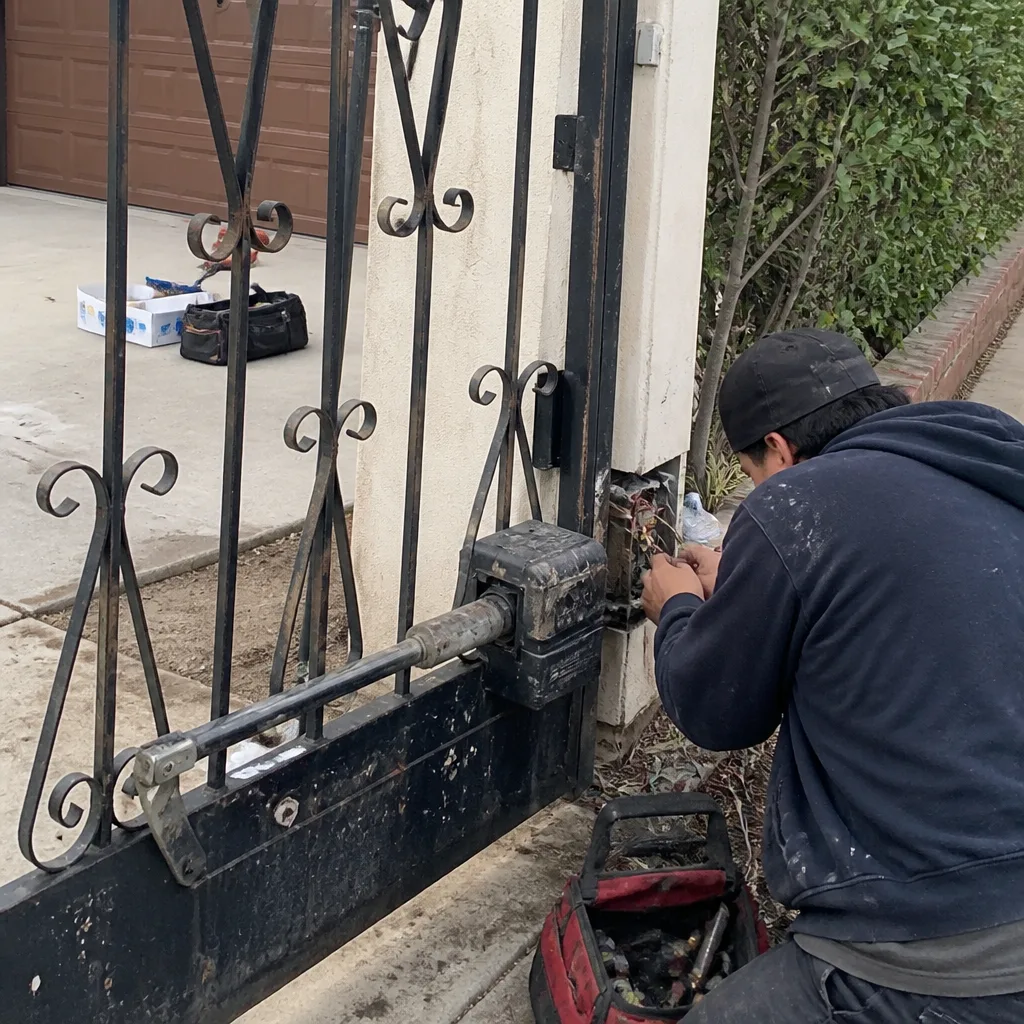 Before
 After
When to Call a Professional
Call someone who works on gates daily if you’re dealing with any of these: burned or corroded control board, motor that hums but doesn’t turn, the gate is heavy or off-track, wiring has been chewed or exposed, the gate reverses for no reason, or you need a new operator and want it done right the first time. Also call if you’ve already tried a DIY fix and the gate still doesn’t work, because the second attempt is always harder than the first. Gate Repair Oxnard offers free estimates in Oxnard, call (833) 589-9922 and we’ll tell you exactly what’s wrong and what it costs. You can also see the full scope of our Gate Repair in Oxnard services before you call.
Frequently Asked Questions
Yes, for the small stuff. Remote programming, battery replacement, photo eye cleaning, hinge lubrication, and manual release operation are all safe DIY tasks in Oxnard. Anything involving the operator’s force settings, wiring, or entrapment protection should go to a professional, because California code applies once you modify an automated gate.
Minor repairs like a photo eye replacement or remote programming typically run $125 to $300, while operator replacement and full rewiring jobs run $800 to $2,500 depending on the brand and the extent of the work. Salt air corrosion near the coast can add cost if wiring needs to be replaced rather than just repaired. Call (833) 589-9922 for an exact quote, and we’ll tell you the price before any work starts.
Oxnard’s coastal air carries salt and moisture, and that combination attacks control boards, terminals, and steel hardware faster than inland climates. Gates within a mile of the water, especially in areas like Silver Strand or Hollywood Beach, need more frequent inspection and lubrication than identical gates further east.
We work on Mighty Mule, Ghost Controls, LiftMaster, and other common brands found in Oxnard homes, plus professional-grade systems like FAAC, BFT, DoorKing, and Viking. If your gate has a brand we don’t recognize, call us and we’ll tell you straight whether it’s something we can service.
An electric gate operator may require a permit depending on the scope of the work and whether it’s considered a new installation or a replacement, so check with the city before starting. A manual gate generally does not trigger the same requirements, but an automated system introduces safety standards like UL 325 that the city takes seriously.
Yes, we offer free estimates for gate repair anywhere in Oxnard, and you’ll get a specific price before any work begins, not an estimate that climbs later. Call (833) 589-9922, tell us what the gate is doing, and we’ll schedule a time to come look at it.
The Bottom Line
The DIY-vs-professional decision on a gate comes down to which task is on the table. Remote batteries, sensor alignment, lubrication, those are homeowner jobs, and doing them yourself saves real money over time. Wiring, operator replacement, force settings, and anything touching entrapment protection belong with someone who works on your brand regularly, not someone learning from a YouTube video in the driveway. Oxnard’s salt air and wind load make the stakes higher than average, especially for coastal properties. If you’re not sure where your specific problem falls, call us, we’ll tell you straight. You can also explore more guides & resources on our blog. And then you can decide.
Written by the team at Gate Repair Oxnard, serving Oxnard since 2017.
More resources: Gate Repair Oxnard home and Electric Gate Repair in Oxnard for the electrical side of gate systems.