
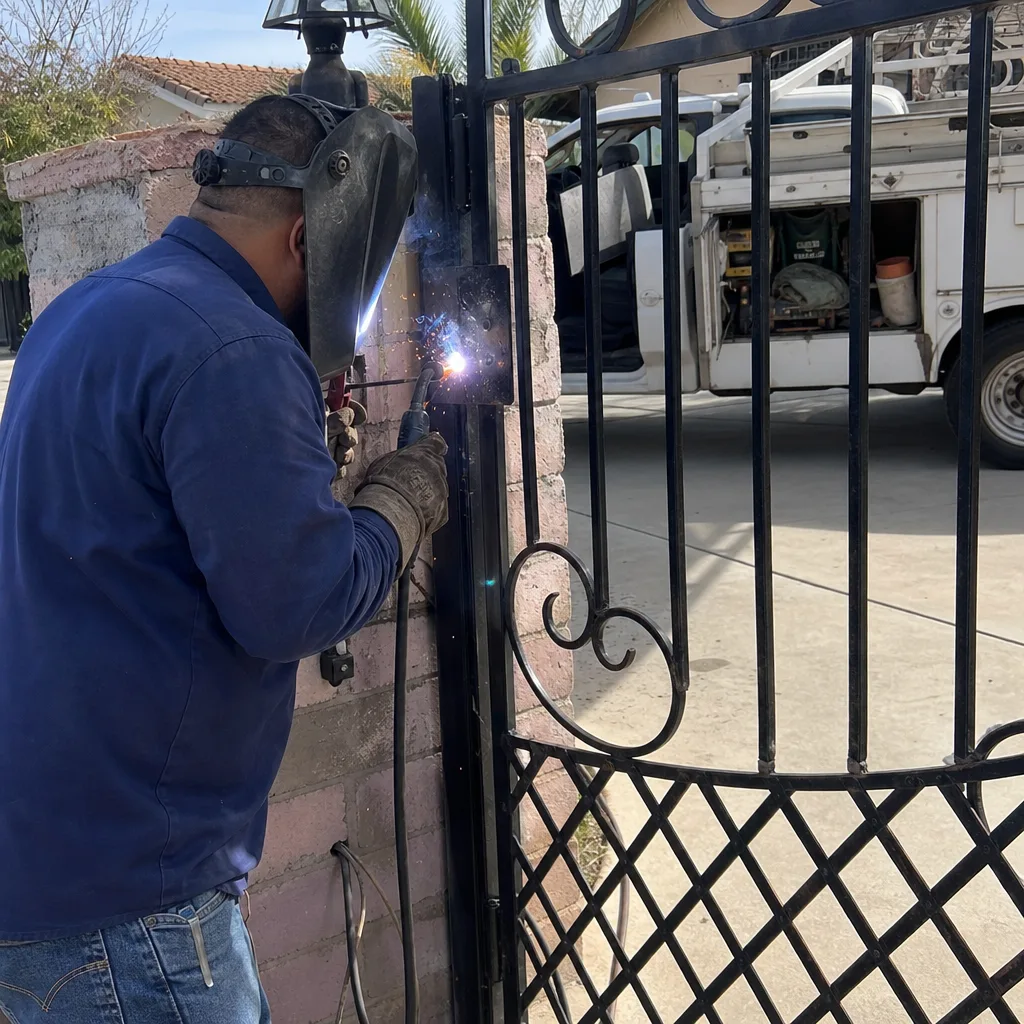
Last updated November 2, 2026
 Wrought iron
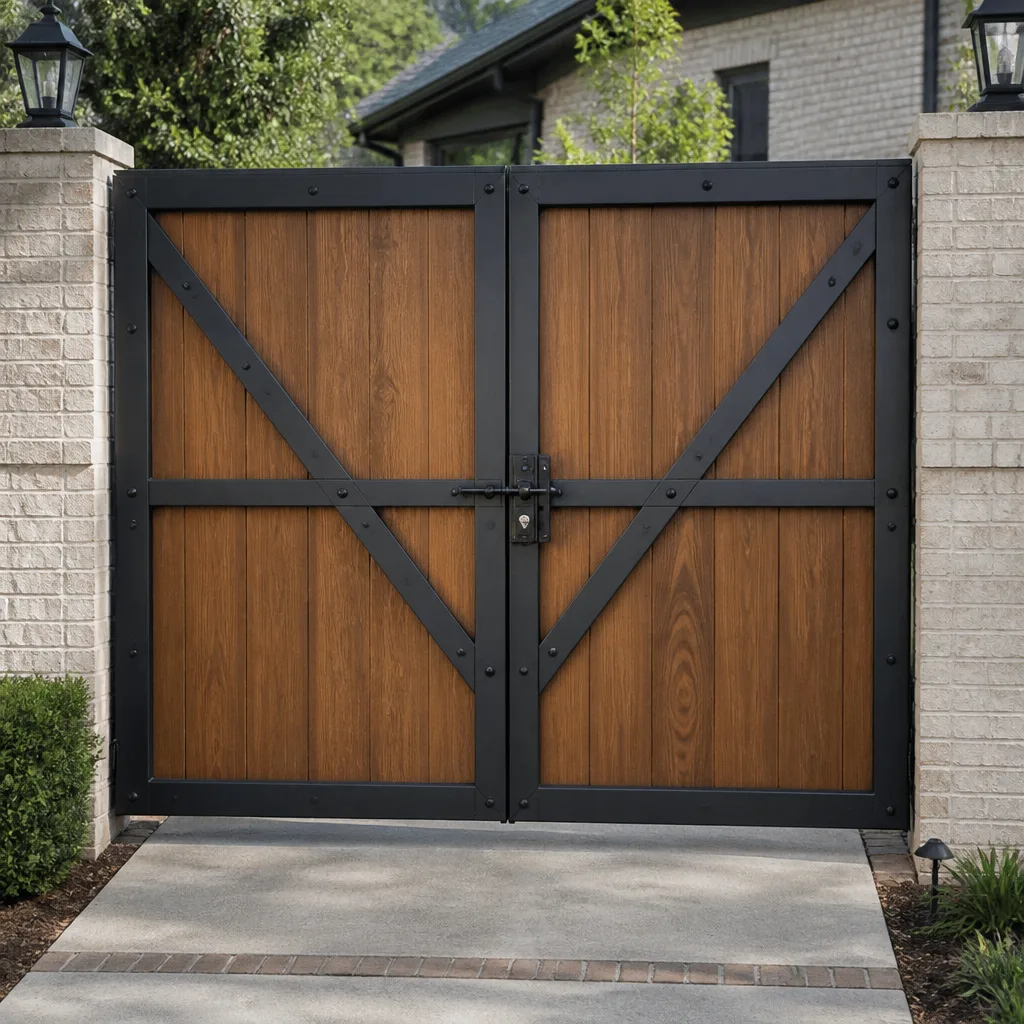 Wood & steel frame
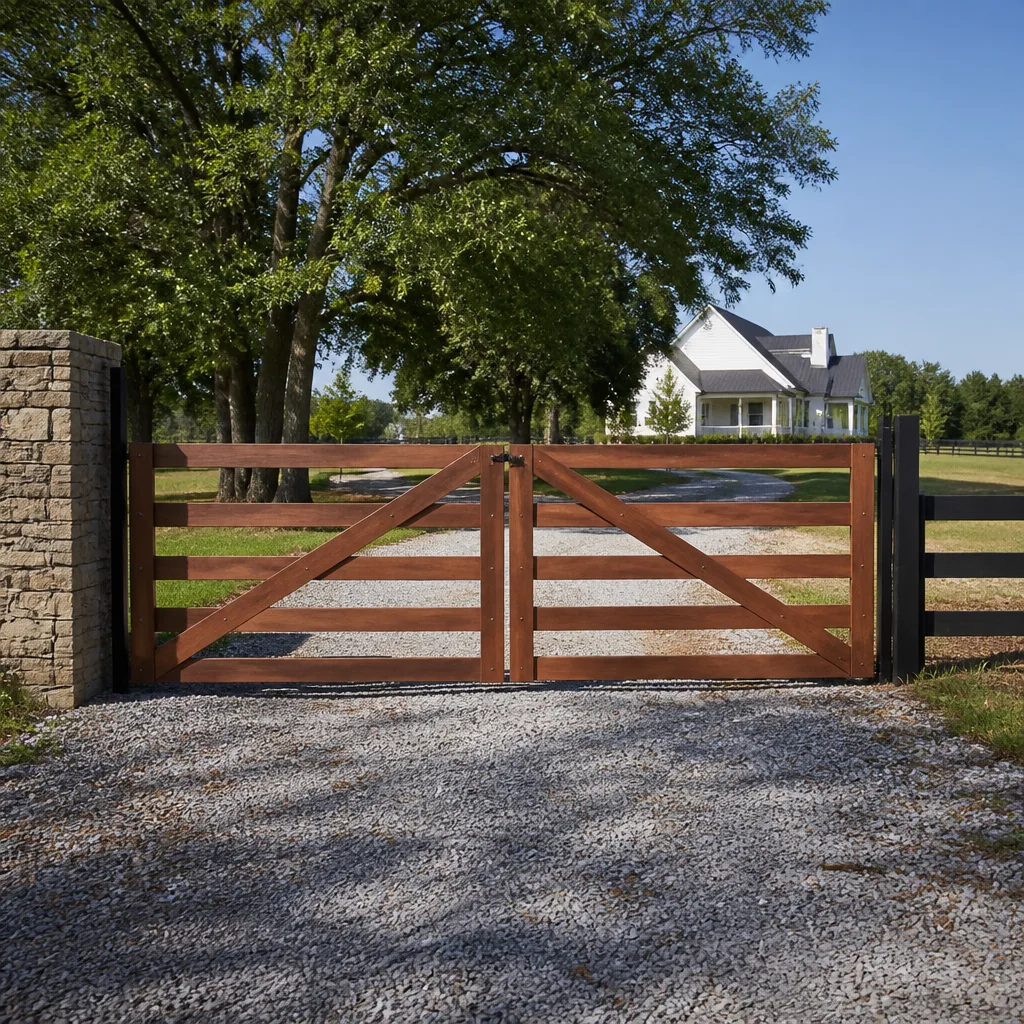 Farm & ranch
 Sliding driveway gates
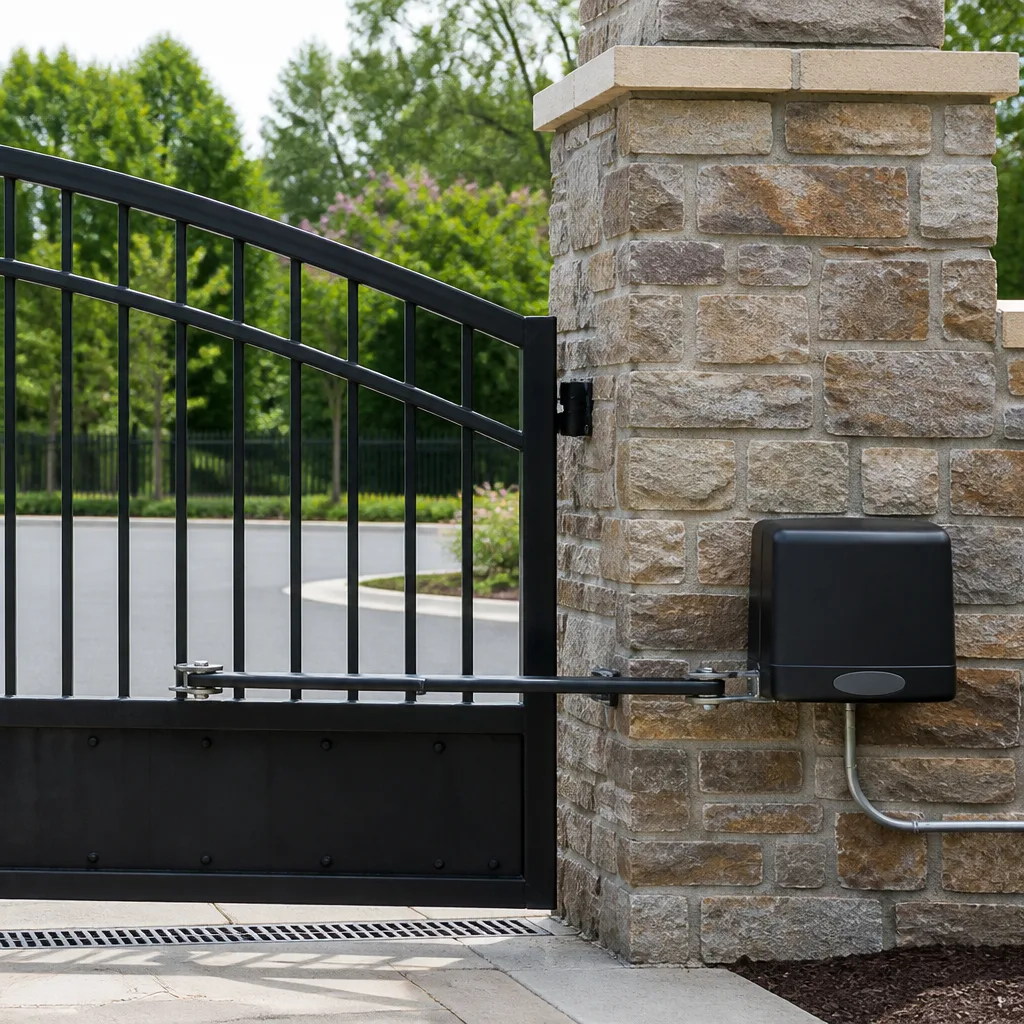 LiftMaster operators
Free on-site gate assessment - hinges, posts, and your LiftMaster or Nice gate operator checked before anything is quoted
The assessment is free and the quote is the invoice.
Get your free estimateGate Repair Maintenance Checklist for Oxnard Homeowners
Most homeowners maintain the parts of a gate they can reach. The parts that fail are almost always the ones they can’t see: the logic board vent, the ground wire connection, the bottom roller track fill. After years of servicing gates across Oxnard, from the beachside homes off Victoria Avenue to the newer tracts up in RiverPark, we’ve learned that coastal air doesn’t just age a gate, it attacks it in a specific sequence. This guide gives you a maintenance checklist organized by component failure risk, not by what’s easy to see. For Gate Repair services beyond what you can handle yourself, our team is available across Oxnard. You’ll learn which ten minutes of work saves you a five-hundred-dollar circuit board, and which tasks are weather-triggered rather than calendar-based.
Styles & brands we work with
- Wrought iron
- Wood & steel frame
- Farm & ranch
- Sliding driveway gates
- LiftMaster operators
Quick Answer
A gate maintenance checklist for Oxnard homeowners prioritizes salt air corrosion inspection on electrical contacts and fasteners, monthly battery backup testing on all automated operators, and quarterly loop detector sensitivity checks before they cause a false trigger or a missed vehicle. The tasks that matter most are the ones you can’t see from the driveway, and most of them take under fifteen minutes.
Table of Contents
- Why Risk Priority Beats a Generic Checklist
- Salt Air Inspection Protocol: What to Check and Where
- Battery Backup Testing: The Outage Test Most Homeowners Skip
- Loop Detector Sensitivity Drift: False Triggers and Missed Detections
- Maintenance Frequency by Component Type, Not by Calendar
- Brand-Specific Maintenance: FAAC, LiftMaster, and Chain-Drive Residential Units
- Weather-Triggered Maintenance for Oxnard’s Marine Layer and Santa Anas
- Common Mistakes to Avoid
- When to Call a Professional
- Frequently Asked Questions
- The Bottom Line
Why Risk Priority Beats a Generic Checklist
A generic gate maintenance checklist tells you to lubricate hinges and tighten bolts. Both matter. Neither is why gates in Oxnard actually stop working. We’re called to homes every week where the hinge was well-greased but the operator’s circuit board had been sitting in salt-laden condensation for two years. The gate looked fine from the driveway. The board was corroded to the point of intermittent failure. A risk-priority checklist starts with the failure modes we see most often and works backward to the ten-minute task that prevents each one. That means inspecting electrical terminations before cleaning the visible hardware. It means testing the battery before the rainy season, not after. It means checking the bottom roller track fill before the track is so packed with sand and silt that the gate drags itself into a motor overload. Swap the order, and you’re maintaining the appearance of a gate while the electrical system quietly fails.
We cover the full range of gate systems in Oxnard, which means we work on both the mechanical structure and the electric operator on every call. If you’re also dealing with an operator that has already failed, our page on electric gate repair in Oxnard walks through what diagnosis looks like.
Salt Air Inspection Protocol: What to Check and Where
Oxnard sits inside a marine influence zone. On a foggy June morning, the air around your gate carries enough salt to coat exposed metal within hours. Cosmetic rust on a steel tube gate is one thing. Corrosion inside an electrical connector is entirely another. The salt air inspection protocol is about finding the second one before it becomes a service call.
Fasteners: Galvanic Corrosion Happens at the Junction
Check every fastener that joins two different metals: steel bolts in aluminum frames, zinc-plated screws on a steel plate, hinge pins inside bushings. What early corrosion looks like is a white, powdery bloom around the hardware, not orange rust. That powdery aluminum oxide is the signature of galvanic reaction, and it’s expanding inside the joint, loosening it microscopically each month. What cosmetic rust looks like is brown-orange surface staining that wipes partially away with a rag. If it’s white and crusty, plan to replace the fastener and apply anti-seize. If it’s orange and superficial, clean and coat it. In Oxnard, the beachside neighborhoods like Oxnard Shores and Hollywood Beach see noticeably faster galvanic buildup than inland tracts, because airborne salt concentration drops with each mile from the water.
Welds: Look for the Hairline Cracks, Not the Flakes
Inspect the weld points at the hinge side of the gate leaf first, then the latch side. A failing weld on a gate often shows as a hairline crack running along the edge of the weld bead, sometimes with a faint orange line inside it. That’s not cosmetic rust. That’s a fatigue crack that has started to oxidize inside. It means the weld is working, flexing every time the gate opens, and it will eventually travel. Cosmetic rust on a weld looks like uniform surface orange, usually nowhere near a hairline. If you see the hairline, stop and monitor that joint weekly until a welder can address it. Don’t wait until it opens up.
Electrical Contacts: The Logic Board Terminals and Ground Wire First
Open the operator cover and look at the control board terminals, especially the low-voltage connections from the loop detector and safety edges. What you’re looking for is a green or blue-green crust on the screw heads, or dull grey discoloration on the copper. That’s corrosion growing by capillary action up the stranded wire. The ground wire connection at the operator chassis is the second stop. A loose or corroded ground on an Oxnard gate causes intermittent logic resets, false obstructions, and dead keypads, and it never shows up on a visual inspection from outside the box. If the ground ring terminal is dull or the wire looks stiff near the lug, clean and re-torque it. This one connection causes more phantom operator faults than almost any other single point on an automated gate system.
Salt air doesn’t affect every gate equally. A Mighty Mule or Ghost Controls unit in a plastic housing is better protected than a commercial-grade operator in a metal cabinet, but the wire terminations inside both corrode at about the same rate. The housing matters less than the seal quality around the conduit entry. Check where the conduit enters the operator box: if the fitting is loose or the grommet has shrunk, salt air is getting inside that housing every day. For a broader look at how these systems are serviced in Oxnard, see our gate repair page for Oxnard homeowners.
Battery Backup Testing: The Outage Test Most Homeowners Skip
A battery backup on a gate operator is not a device you install and forget. It’s a consumable with a three-to-five-year service life, and in Oxnard the failure usually announces itself during the first blackout after the battery has already died. The time to find out is not during a power outage.
- Locate the battery. On most residential operators it’s a sealed lead-acid brick, either inside the operator housing or in a separate weatherproof box at the gate.
- Check the date code. If the battery is over three years old, test it under load, not just with a voltmeter. A battery can read 12.8 volts at rest and still collapse the instant the motor draws current.
- Run a load test. With the gate under normal use, disconnect the AC power to the operator (or switch off the breaker feeding it) and cycle the gate a full open-close cycle on battery alone. A healthy battery should move the gate at slightly reduced speed but without hesitation, grinding, or a mid-travel stop.
- Watch for the signs of a failing battery: slow motion even fully charged, the gate pausing mid-cycle and then resuming, or the operator emitting a low-voltage beep pattern. Any of those means the battery is not holding capacity.
- Record the test date. Write it on the battery with a marker. The next test should be in six months, not in two years when you remember again.
In our experience, most Oxnard homeowners discover the backup is dead during a scheduled power outage or a Santa Ana wind event that knocks out a feeder line. The gate won’t open manually because the release lever is rarely used and has seized. Now the car is trapped in the driveway, the operator is dead, and the battery is a paperweight. Testing takes eight minutes. Replacing a battery costs a fraction of an emergency call.
Loop Detector Sensitivity Drift: False Triggers and Missed Detections
Loop detectors are the invisible part of an automated gate system. A saw-cut loop of wire in the concrete senses the metal mass of a vehicle and tells the operator to hold the gate open. In Oxnard, three things cause loop detector sensitivity to drift: temperature swings between fog season and Santa Ana days, moisture intrusion into the saw-cut itself, and iron ore content in the aggregate under residential driveways. A loop that drifts too sensitive starts holding the gate open for no reason, or worse, false-triggering as a car drives past on the street. A loop that drifts too insensitive misses your car entirely, and the gate starts closing on the bumper.
How to Identify Loop Detector Drift
- False triggers: The gate opens on its own when no vehicle is present, often at the same time each day. This is usually a loop that has drifted too sensitive and is detecting rebar movement, temperature contraction, or a metallic object like a bicycle or trash bin placed near the loop edge.
- Missed detections: You pull up to the gate and it does not open. You back up, pull forward again, and now it opens. That’s not a flaky remote. That’s a loop that has drifted too insensitive to detect your vehicle on the first pass.
- Gate closing while a vehicle is over the loop: This is the dangerous failure mode. The loop is supposed to hold the gate open while the car is over it. If the gate starts closing while you’re still on the loop, the detector’s sensitivity or its fail-safe relay is failing. Stop using the gate in automatic mode and set it to hold-open until the detector is checked.
The fix for a drifted loop detector is usually a small potentiometer adjustment on the detector module, an eight-dollar part inside the operator box. The problem is that the adjustment is interactive: too far one way and the loop false-triggers, too far the other and it misses vehicles. For a homeowner, the practical maintenance task is identification, not adjustment. If you’re seeing any of the three symptoms above, the detector needs a sensitivity adjustment and possibly a loop continuity test. This is one of the areas where brand matters. A LiftMaster loop detector module dials in differently than a FAAC or BFT unit, and applying a generic “turn it up a little” fix often makes the false triggering worse.
Maintenance Frequency by Component Type, Not by Calendar
A monthly-versus-annual checklist assumes every gate component ages on the same calendar. They don’t. Hinges wear by cycle count. Batteries age by time and heat. Loop detectors drift by temperature change. Roller tracks fill by wind and rain. The correct maintenance frequency is per component, and some tasks are triggered by weather events rather than dates.
Every 30 Days
- Visual check of the safety edges and photocells: Wipe the photocell lenses with a dry cloth. Oxnard’s marine layer leaves a fine film that reduces beam strength and causes random obstruction faults.
- Bottom roller track inspection: On a slide gate, look at the track fill level. If you can see more than a quarter inch of sand, leaf litter, or silt packed into the track, clear it before the gate starts dragging. A dragging gate overloads the motor and trips the limit switch.
- Operator housing seal check: Confirm the cover gasket is seated and the conduit fitting is tight. Ten seconds now prevents a circuit board replacement later.
Every 90 Days
- Battery backup load test: As described above, kill AC power and cycle the gate.
- Fastener torque check: Use a wrench, not your fingers. Go over the hinge bolts, latch hardware, and the operator mounting bolts. In Oxnard, the temperature cycling between fog mornings and dry afternoons works steel and aluminum loose faster than in inland climates.
- Loop detector behavior observation: Park a car on the loop and see if the gate holds open. Drive a car just past the loop edge and see if it false-triggers. Two minutes of observation tells you if the detector has drifted.
Every 6 Months
- Full wire termination inspection: With the operator power off, open the housing and inspect every terminal: loop detector, safety edge inputs, keypad, power input, ground. Look for the corrosion signs described in the salt air protocol. Clean and re-torque anything questionable.
- Gate leaf alignment check: On a swing gate, look at the gap between the gate leaves at rest. If the gap has widened or narrowed, the gate frame has moved. On a slide gate, check the gate’s tracking alignment by watching it run through a full cycle and listening for rhythmic scraping.
- Chain or belt tension check: On chain-drive operators, a loose chain slaps and wears the sprockets. Too tight, and it loads the motor bearings. The correct tension leaves about a half inch of slack at the midpoint.
Weather-Triggered, Not Calendar-Based
- After heavy rain: Inspect the loop detector saw-cut for water accumulation. If water sits in the cut, the loop detunes and may false-trigger until it dries.
- After a Santa Ana event: Blowing sand and dust fill the bottom roller track and coat the photocell lenses. Expect false obstruction faults within days if not cleaned.
- After a marine layer stretch of more than five consecutive days: Open the operator housing and check for condensation. Salt-laden condensation is what kills circuit boards in Oxnard. A desiccant pack inside the housing, replaced twice a year, is cheap insurance.
Brand-Specific Maintenance: FAAC, LiftMaster, and Chain-Drive Residential Units
Not all gate operators age the same way. The maintenance a hydraulic FAAC unit needs is different from what a chain-drive LiftMaster needs, and both differ from an entry-level residentially focused operator like a Ghost Controls or Mighty Mule.
FAAC Hydraulic Operators
FAAC hydraulic swing gate operators run on hydraulic fluid, not a direct gear train. Those units push fluid through a manifold to move the piston, and that changes the maintenance picture entirely. Every six months, a FAAC unit needs a check of the hydraulic fluid level and a visual on the hoses and fittings for weeping. What looks like a small oil stain under the operator is rarely just a stain, it’s a slow leak that will eventually drop the operator’s torque and make the gate move sluggishly or stop mid-travel. FAAC units are also sensitive to contaminated fluid. If the fluid looks dark or milky, moisture has entered the system, which is a real concern in Oxnard’s coastal humidity. In our experience, FAAC hydraulic units on beachside properties need fluid attention noticeably more often than the same unit installed five miles inland. The brand matters, and the location matters.
LiftMaster Chain-Drive and Belt-Drive Operators
LiftMaster builds the most widely installed residential and commercial gate operators in North America, and the maintenance profile on a LiftMaster chain-drive slide gate unit is mostly about the drive train. The chain stretches over time, especially on a long slide gate run. The stretch announces itself as a slapping sound when the gate accelerates or decelerates. Left unchecked, the chain wears the sprockets, and then the repair is a full drive train replacement instead of a tension adjustment. Belt-drive LiftMaster units don’t stretch the same way, but their pulleys accumulate salt-air oxidation on the bearing races, which feels like a rough-running gate. The maintenance task is annual lubrication of the bearings with a suitable lubricant, not just spraying the belt. On either version, LiftMaster operators of recent vintage have logic boards with diagnostic LEDs that most homeowners never check. A quarterly glance at the diagnostic LED pattern while the gate is running tells you if the operator is logging error codes before they become failures. Most Oxnard calls we get for LiftMaster operators fall into two buckets: chain stretch that was audible for months, or a diagnostic code that was flashing for weeks and ignored.
Mighty Mule and Other DC Residential Operators
Entry-level residential operators like Mighty Mule units are usually DC-motor systems powered by a transformer and a small battery. They are simpler electrically, but they share the Oxnard vulnerability: their control boards are often mounted in plastic housings that are only weather-resistant, not weatherproof. The maintenance priority on a Mighty Mule is the battery health and the board seal. If the unit is solar-powered, add a quarterly panel cleaning to the list, because a dust film on the panel reduces charge current below what the board needs, especially during the marine layer season when solar gain is already low. A Mighty Mule that works all summer and fails every winter is often a solar panel that is not getting cleaned, combined with a battery that is not getting charged fully.
Weather-Triggered Maintenance for Oxnard’s Marine Layer and Santa Anas
Oxnard has two weather patterns that matter to gates, and they act differently. The marine layer brings moisture and salt. The Santa Anas bring dry heat and dust. A gate that survives one season can be brought down by the other if you don’t adjust what you check.
Marine Layer Season (Typically May through August)
The June gloom is not a myth, it’s a daily moisture cycle. Every morning the fog rolls in off the Pacific, and every morning the metal surfaces on your gate collect condensation. In beachside neighborhoods this condensation carries measurable salt. The maintenance response during marine layer season is increased electrical inspection frequency. Check the operator board terminals every 60 days instead of every 90. Watch for the first faint signs of green crust on the low-voltage terminals. If your operator is mounted in a location that gets morning shade, it holds condensation longer than a sun-exposed unit, and the corrosion rate is higher. A desiccant pack inside the housing, replaced at the start of the season, absorbs a surprising amount of moisture. We’ve opened dozens of operator boxes in Oxnard and found the desiccant pack swollen full of water while the board stayed clean. The ten-dollar pack did the job the housing seal could not.
Santa Ana Season (Typically September through November)
Santa Ana winds reverse the moisture picture: hot, dry air blowing from the inland deserts toward the coast. The maintenance concern shifts from corrosion to dust and heat. Bottom roller tracks fill with wind-blown sand within days. Photocell lenses film over with dust. The operator runs hotter under high ambient temperature and direct sun. The maintenance response is cleaning-focused. Clear the track, wipe the lenses, and check that the operator’s ventilation openings are unobstructed. A hot operator with a packed track pulls more current, and more current on a dry windy day is the classic recipe for a tripped breaker or a thermal overload. After any Santa Ana event strong enough to leave dust on your car, check the gate’s track and lenses the same day.
The Shoulder Seasons: What Changes First
The transition periods between marine layer and Santa Ana seasons are when loop detectors drift. The rapid temperature cycle, cold foggy mornings followed by hot dry afternoons, expands and contracts the concrete around the loop wire. That’s the mechanism behind sensitivity drift. If your gate starts false-triggering or missing vehicles in April or October, the loop detector is the first component to suspect, not the remote control and not the operator motor. For new gate installations or full system replacements in Oxnard, our gate installation page covers what goes into planning for these conditions from day one.
Common Mistakes to Avoid
- Lubricating everything with WD-40. WD-40 is a solvent, not a long-term lubricant. On gate hinges it washes away the existing grease and leaves the joint drier than before. Use a lithium-based grease on metal-to-metal joints and a silicone spray on plastic roller wheels.
- Pressure washing the gate and the operator. A pressure washer forces water past the operator housing seal and into the electrical compartment. It also washes the grease out of every hinge and bearing. Use a garden hose at low pressure and a soft brush, and cover the operator and keypad with plastic first.
- Ignoring a gate that moves slower than it used to. Slowing is never normal. A gate that’s moving at 80% of its usual speed is telling you something: low battery, failing motor, hydraulic leak, or track resistance. The cause gets more expensive the longer it runs.
- Assuming a false trigger is a problem with the remote. In Oxnard, the most common cause of an unexplained gate opening is a drifting loop detector, followed by a corroding low-voltage terminal. The remote is usually the last thing to fail. Replacing remote batteries does not fix a loop.
- Replacing the operator before checking the ground wire. A corroded ground connection mimics every symptom of a failing control board: random resets, phantom obstructions, intermittent keypad. A wire brush and a re-torque costs nothing, and it fixes the problem more often than you’d think.
- Skipping the battery test because the power hasn’t gone out. A battery backup that hasn’t been load-tested in two years is a battery you know nothing about. The test takes eight minutes. The emergency call during a blackout takes longer and costs more.
- Painting over corrosion without treating it. Coating an active galvanic joint with paint seals the corrosion in and hides it from view while it continues eating the fastener. Remove the corrosion, neutralize the surface, and then coat.
When to Call a Professional
Some maintenance tasks are homeowner-grade. Others are not. If you see a hairline crack running along a gate weld, stop monitoring it and call now. If the gate starts closing while a vehicle is still on the loop detector, disable automatic operation and leave the gate in manual or hold-open mode until a technician checks the detector. If you open the operator housing on a LiftMaster, FAAC, or Elite unit and find corrosion on the board terminals, a home fix is rarely a permanent one. If the battery fails a load test, replacement is usually straightforward, but replacement with the wrong capacity battery will damage the charging circuit. For any of these, a professional diagnosis is cheaper than the repair after a DIY attempt. Gate Repair Oxnard offers free estimates in Oxnard. Call (833) 589-9922 and we’ll tell you what’s actually wrong before any work begins.
Frequently Asked Questions
Every 60 to 90 days. Oxnard’s marine layer accelerates corrosion on electrical contacts and dissimilar-metal fasteners, especially in beachside neighborhoods. A quarterly inspection of the operator board terminals and the ground wire catches corrosion before it causes intermittent faults. If the gate is within a mile of the water, inspect every 60 days during the marine layer season.
In Oxnard, the most common cause is a loop detector that has drifted too sensitive and is picking up temperature-related movement in the concrete or rebar. The fog-cooled night followed by morning sun expansion is enough to trigger a marginal detector. If it happens at roughly the same time daily, it’s not a ghost and it’s not a neighboring remote, it’s the loop.
Yes, in most cases. Switch off the breaker feeding the gate operator or unplug the transformer, then cycle the gate a full open-close cycle using the remote or keypad. If the gate moves at full speed, the battery is healthy. If it moves slowly, pauses mid-travel, or won’t move at all, the battery has failed or is close to failing.
Three to five years in an Oxnard climate, with heat being the bigger life-shortening factor. An operator mounted in direct afternoon sun in a steel housing runs hotter, and heat degrades battery chemistry faster than the coastal humidity does. If the battery is past the three-year mark, test it under load every six months and replace it at the first sign of slow operation.
We service nine major gate operator brands including LiftMaster, FAAC, BFT, Linear, Viking, Ghost Controls, DoorKing, Elite, and Mighty Mule, covering residential, commercial, and agricultural operators. You don’t need a different technician for a Mighty Mule on a residential driveway than for a DoorKing access-control system on a commercial property. For more on our service area, start at our Gate Repair Oxnard home page.
Yes. A hydraulic operator like a FAAC needs fluid level and hose condition checks every six months, plus attention to fluid contamination from coastal moisture. A chain-drive operator like a LiftMaster needs chain tension and sprocket wear checks. Applying chain-drive maintenance to a hydraulic unit does nothing useful, and vice versa.
Yes. (833) 589-9922 is our Oxnard line, and the estimate costs you nothing. We diagnose the gate, tell you what’s wrong, and quote the repair before any work is authorized.
The Bottom Line
Maintaining a gate in Oxnard is less about a rigid monthly calendar and more about watching the components most likely to fail in a coastal climate. The salt air protocol catches corrosion before it reaches a circuit board. The battery load test catches a dead backup before a Santa Ana blackout. The loop detector observation catches sensitivity drift before a gate closes on a car. Check these invisible failure points first, and the visible hardware like hinges and tracks stays manageable on a slower schedule. If any of these inspections turns up something questionable, call (833) 589-9922 for a free estimate, and we’ll confirm what you’re seeing before you spend a dollar on repairs.
Written by the team at Gate Repair Oxnard, serving Oxnard since 2017. Explore our more guides & resources for gate owners.
See the difference
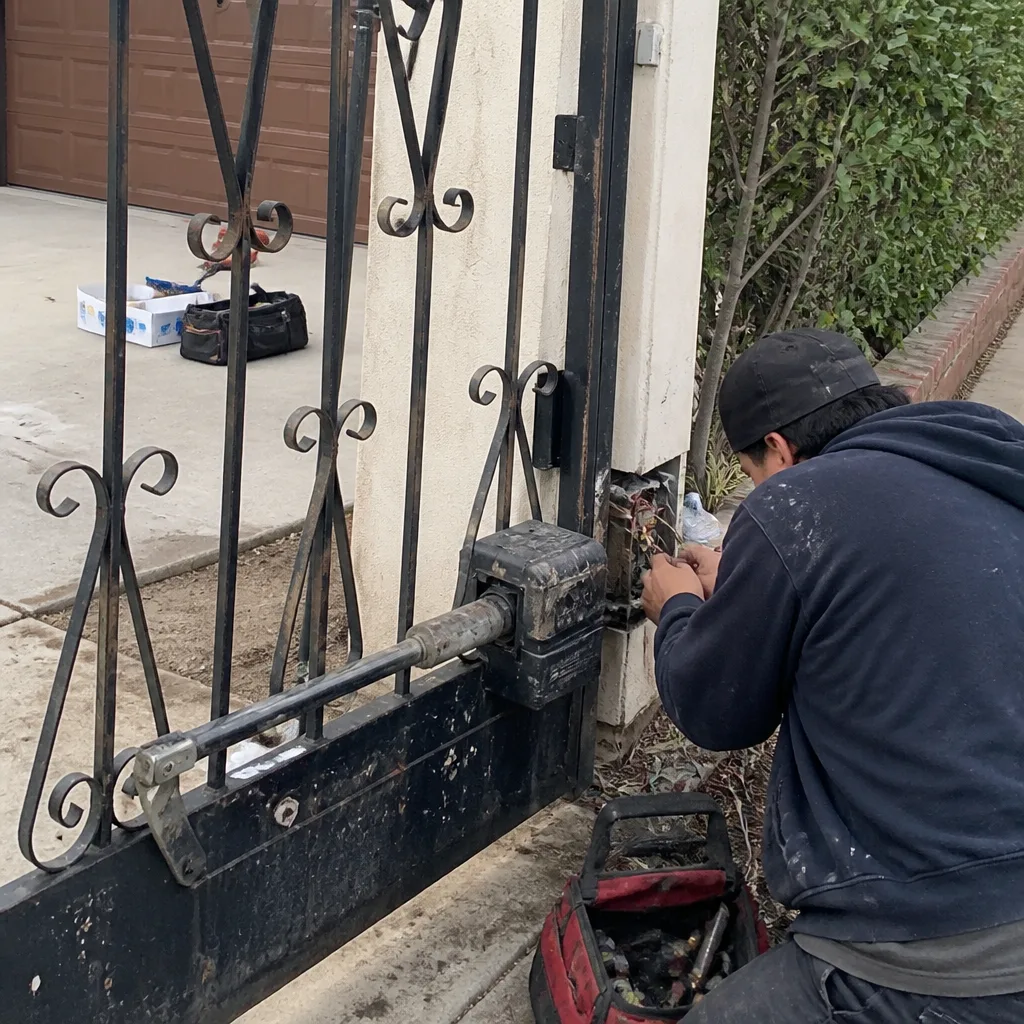
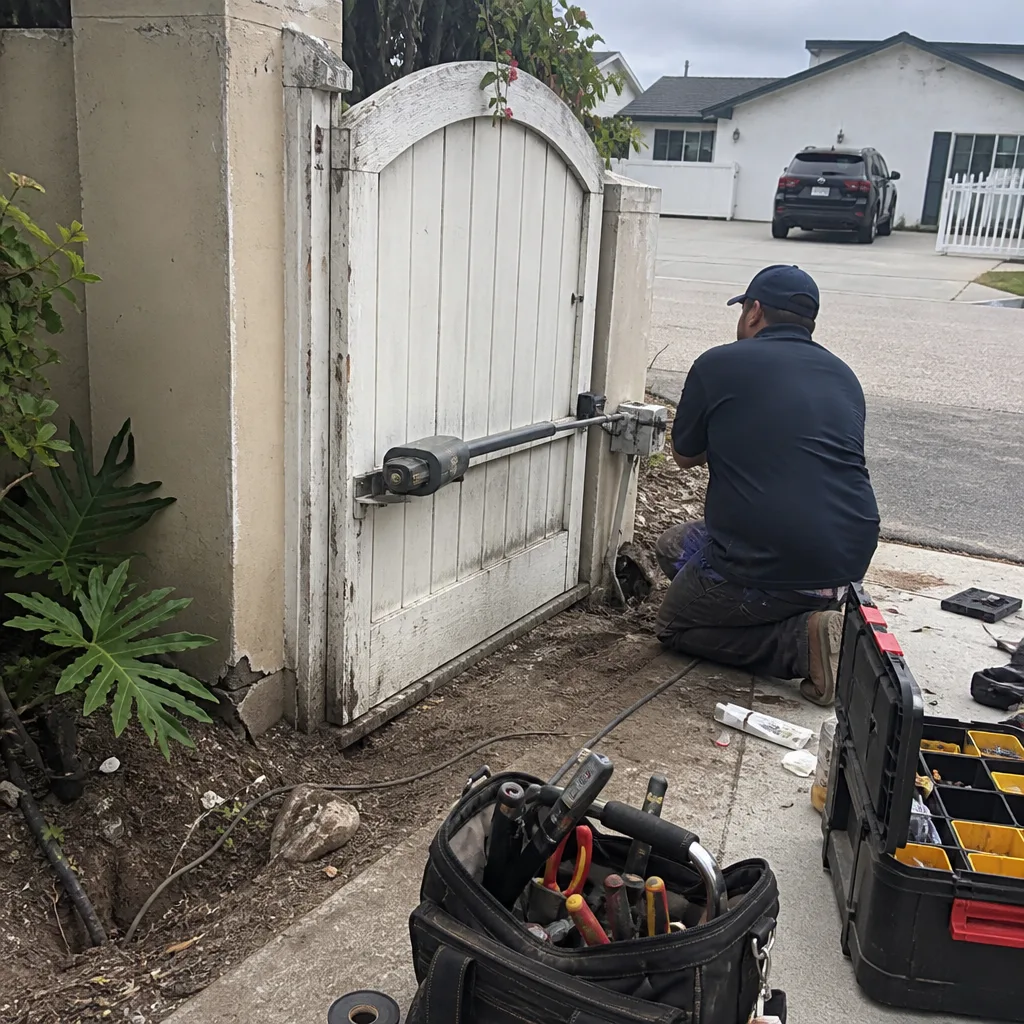 Before
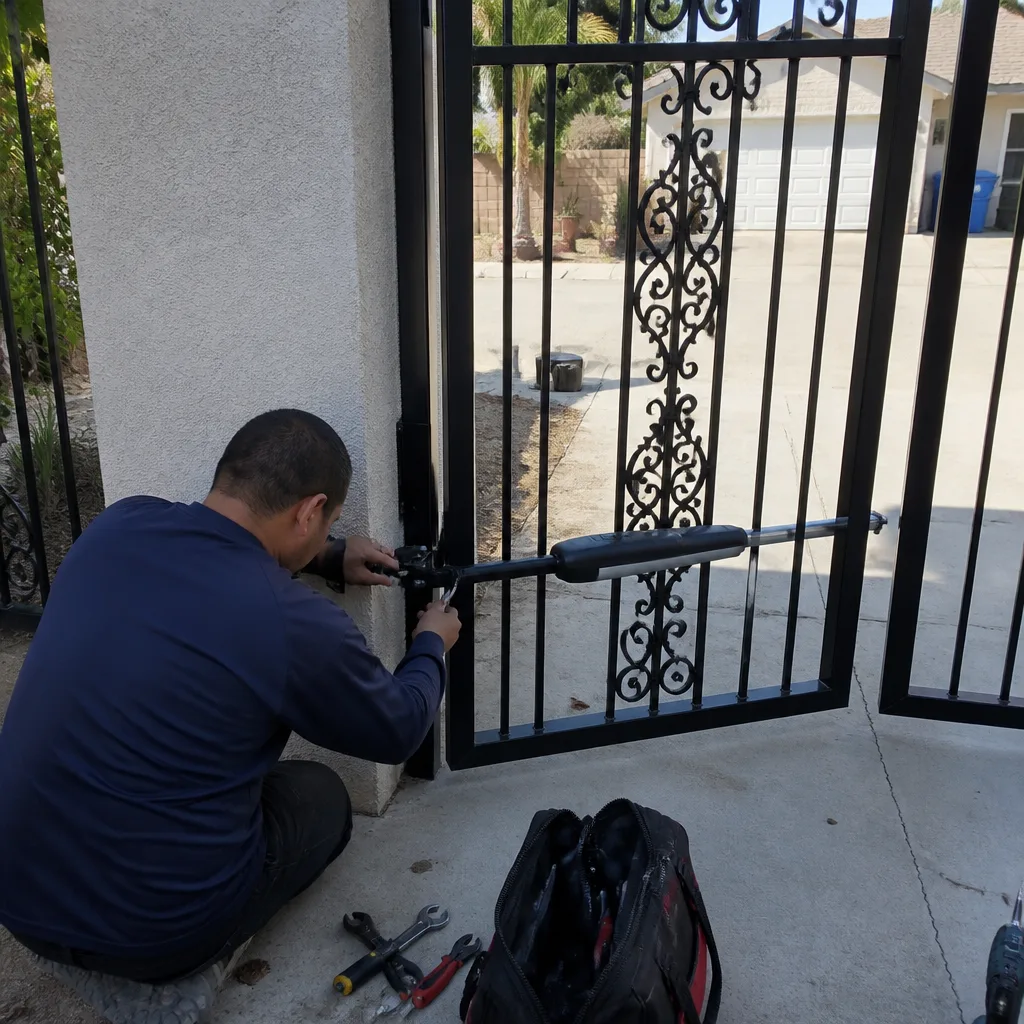
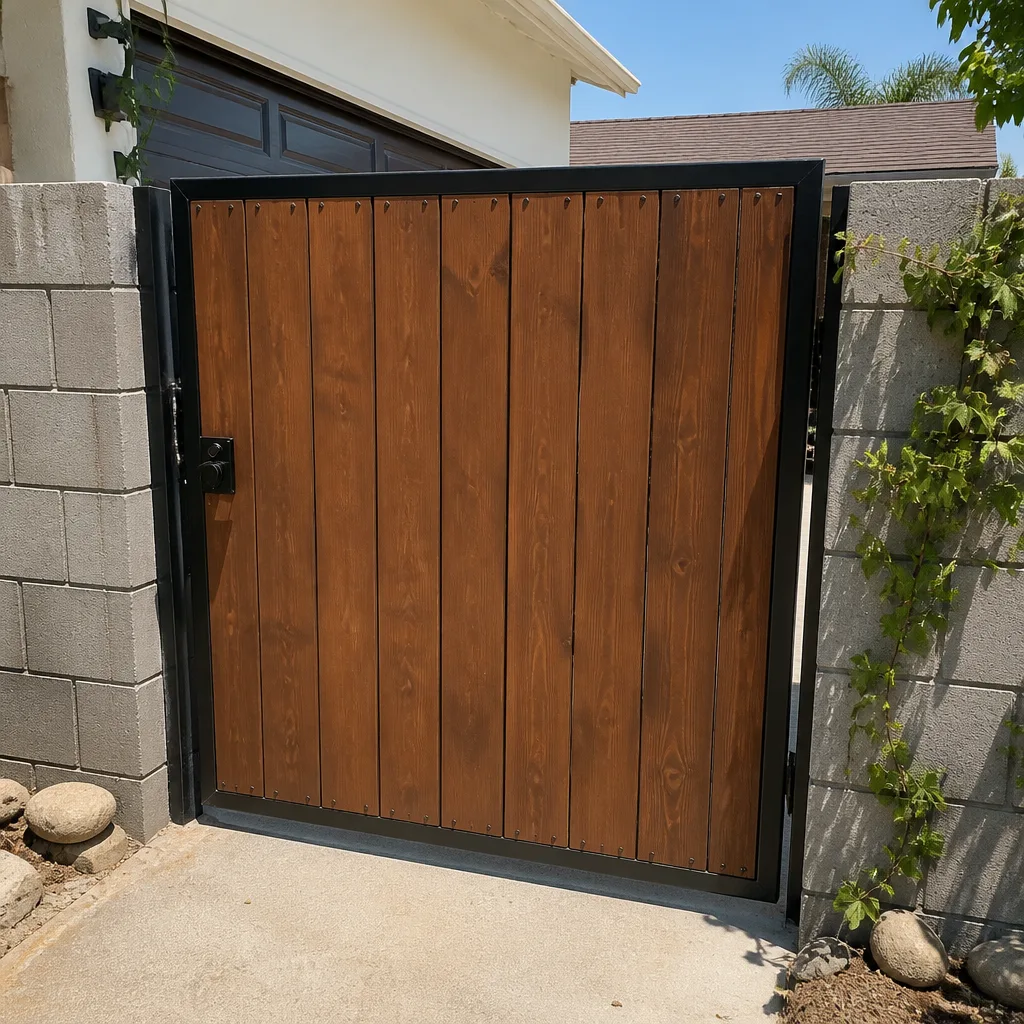 After
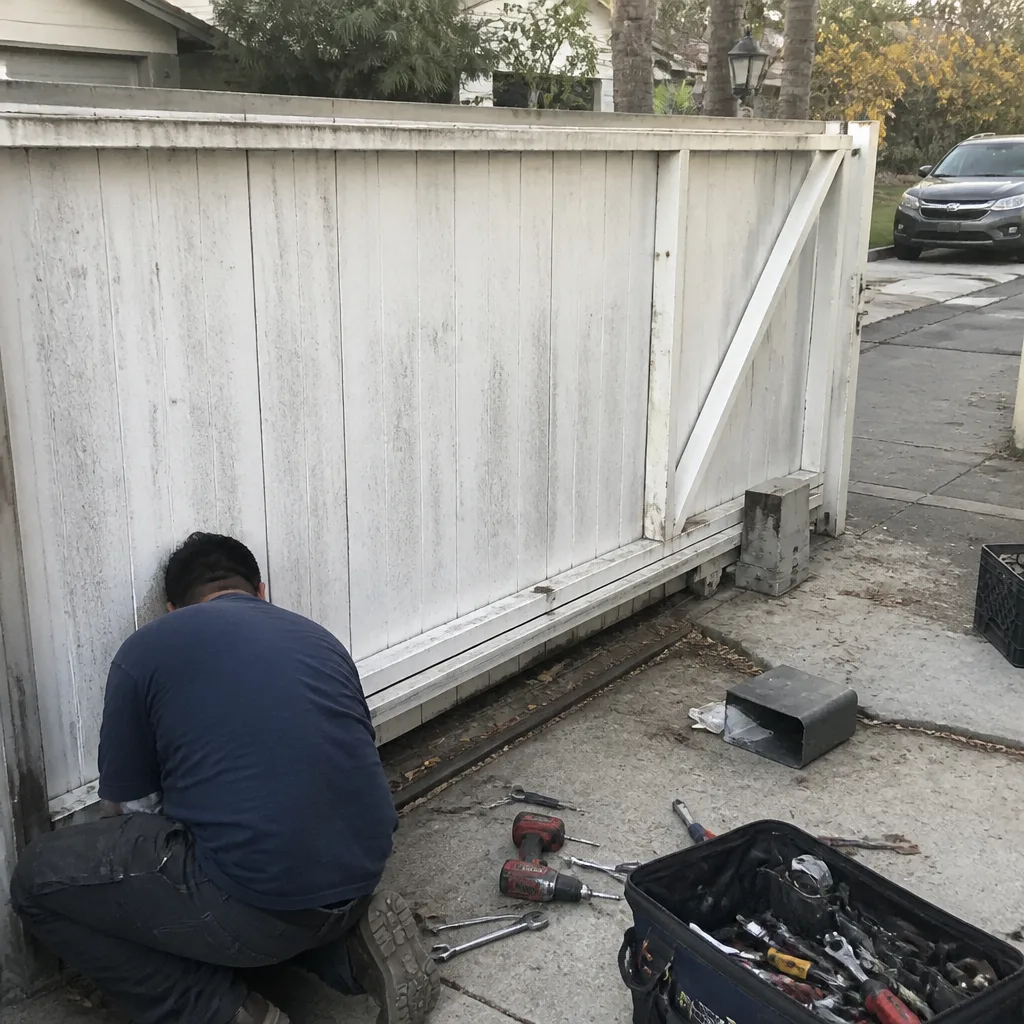 Before
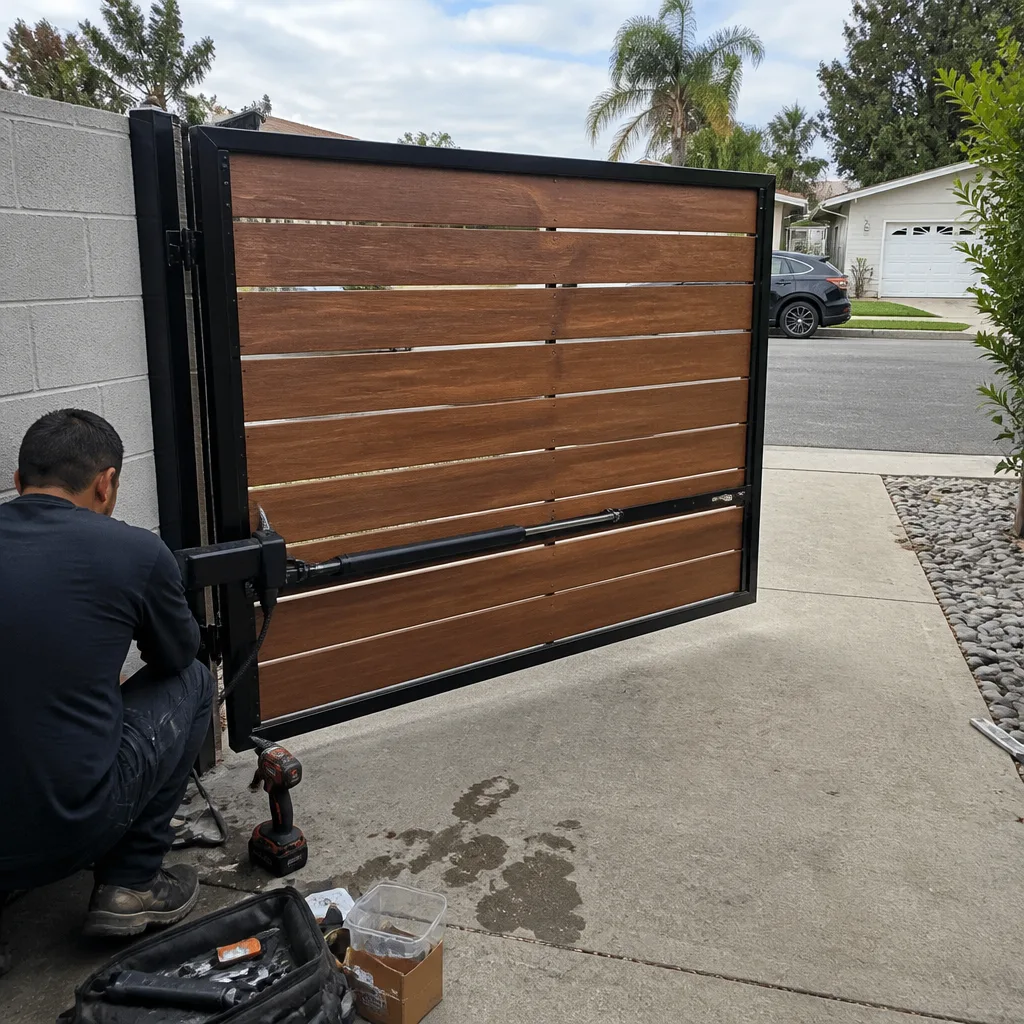 After
 Before
 After