
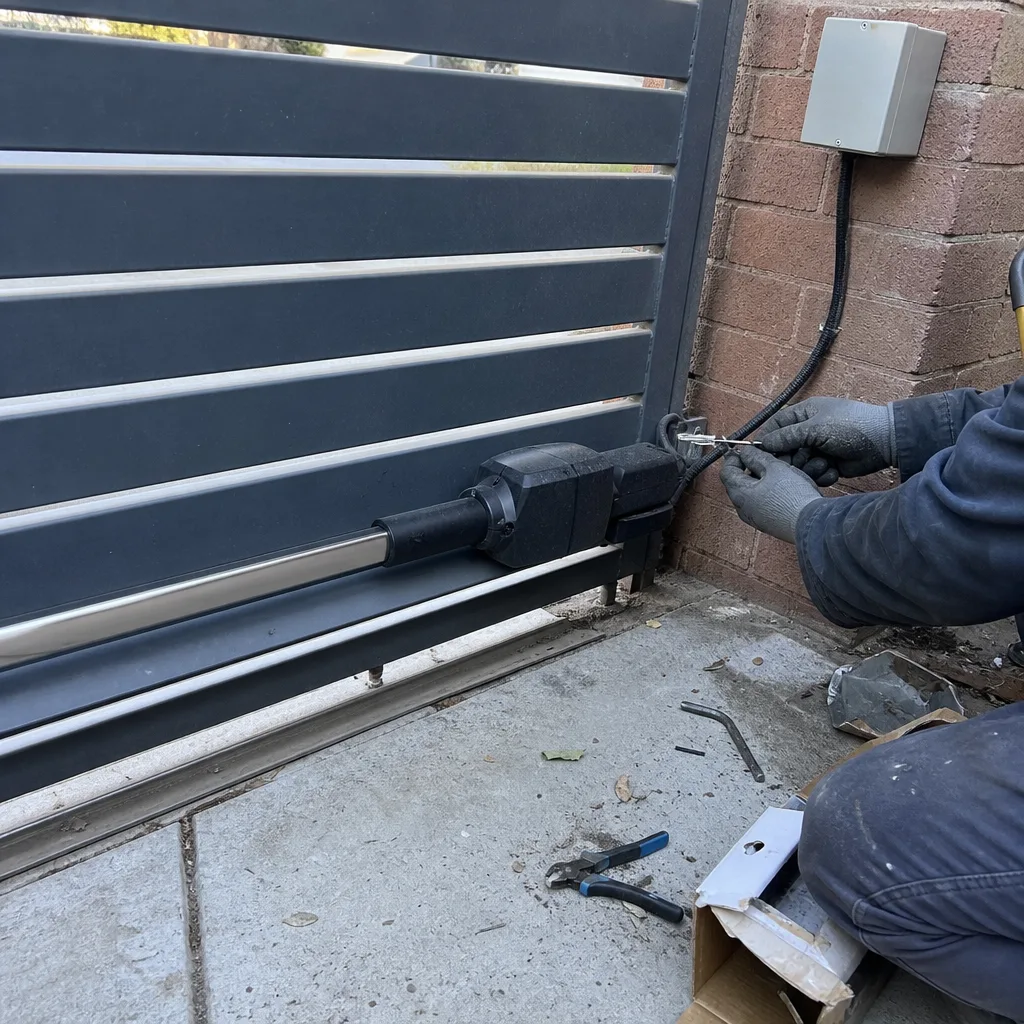
Last updated November 2, 2026
 Wrought iron
 Wood & steel frame
 Farm & ranch
 Sliding driveway gates
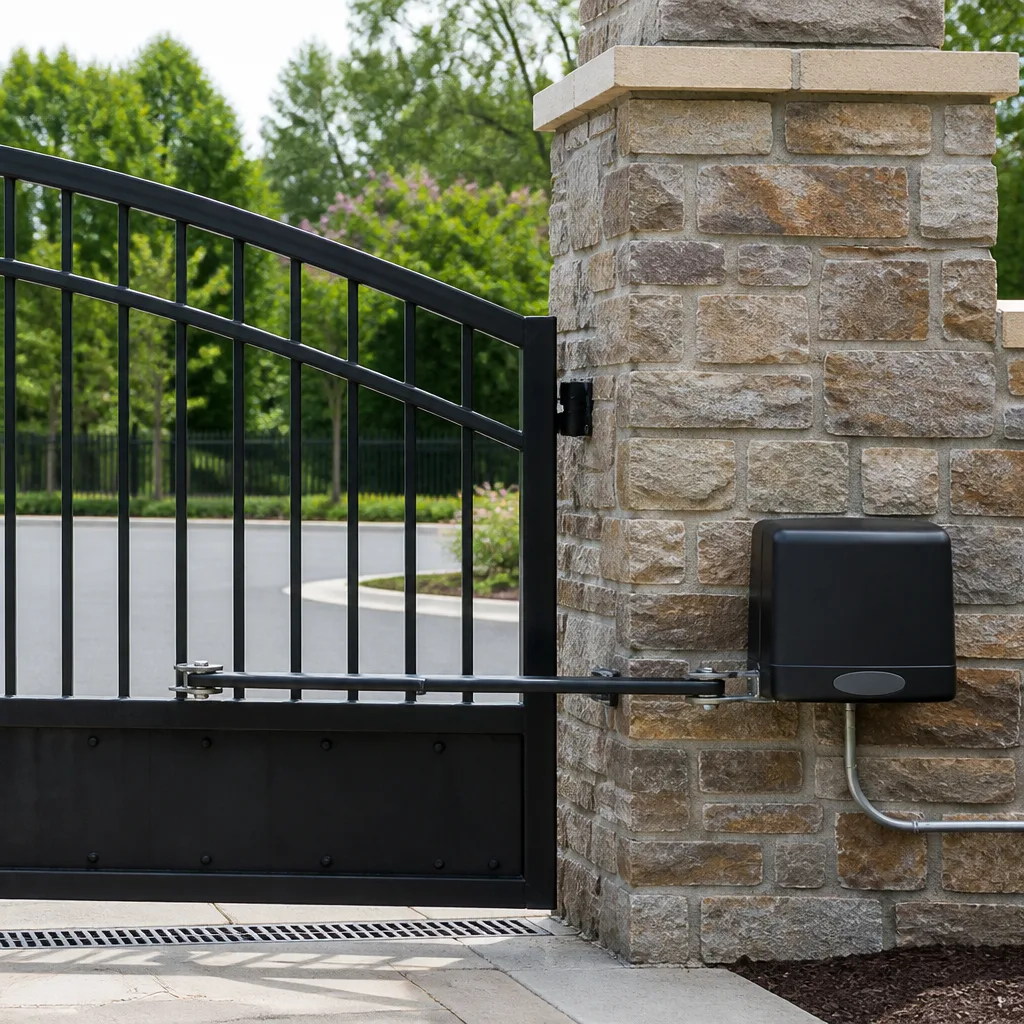 LiftMaster operators
Free on-site gate assessment - hinges, posts, and your LiftMaster or Nice gate operator checked before anything is quoted
The assessment is free and the quote is the invoice.
Get your free estimateGate Repair Warning Signs: An Oxnard Homeowner’s Reference Guide
A gate that reverses halfway open isn’t a sensor problem 60% of the time. It’s an overload fault, the motor’s way of telling you it can no longer overcome mechanical drag somewhere in the system. Most Oxnard homeowners misread this signal, replace a perfectly good sensor, and then watch the same failure return two weeks later. This guide breaks down what your gate is actually trying to tell you, organized by symptom, gate type, and the specific failure categories that cause each warning sign. By the time you finish reading, you’ll know which issues give you weeks to schedule a repair and which ones mean the gate needs to come out of service immediately.
Styles & brands we work with
- Wrought iron
- Wood & steel frame
- Farm & ranch
- Sliding driveway gates
- LiftMaster operators
Quick Answer
Gate failure in Oxnard rarely arrives without warning. You’ll see it first as slow operation, partial travel, reversing, grinding, or complete non-response, and each symptom points to a different failure category. The most reliable early indicators are a gate that runs slower than it did six months ago, a motor that sounds strained under normal conditions, or an operator that trips its breaker or flash code intermittently. If you catch the mechanical warning signs early, repair is usually a few hundred dollars. If you ignore them, the same failure migrates into the motor or control board and the cost triples. See How to Hire a Gate Repair Contractor in Oxnard: A Step-by-Step Guide to avoid overpaying.
Table of Contents
- How Gates Warn: The Five Symptoms That Matter
- Symptom-to-Cause Mapping for Oxnard Gates
- Warning Signs Specific to Swing Gates vs. Slide Gates
- Dying Battery Backup vs. Failing Logic Board: How to Tell Them Apart
- Reading Error Codes: LiftMaster, Mighty Mule, and FAAC in Plain Language
- Weeks to Schedule vs. Stop Using the Gate Now
- How Oxnard’s Coastal Climate Accelerates Gate Wear
- Common Mistakes to Avoid
- When to Call a Professional
- Frequently Asked Questions
- The Bottom Line
How Gates Warn: The Five Symptoms That Matter
Every gate failure mode announces itself through one of five observable symptoms. In our experience working on LiftMaster, FAAC, Viking, Ghost Controls, DoorKing, Elite, and Mighty Mule operators across Oxnard, the symptom is rarely the problem itself. It’s the downstream effect of a root cause further up the chain. Here is what each symptom means.
Slow operation. A gate that takes noticeably longer to complete its travel than it did when installed is usually fighting something. That something is either a mechanical restriction (dry bearings, a bent wheel track, sagging hinges) or an electrical issue (low voltage at the motor, undersized wire from a long power run, or a failing capacitor in the operator). The motor compensates until it can’t. Slow operation is the earliest and most overlooked warning sign because homeowners adapt to it gradually. Run a timer on your gate. If full travel takes more than 18 – 22 seconds when it used to take 12 – 14, something is degrading.
Partial travel. The gate opens or closes partway, then stops or reverses. With Ghost Controls and Mighty Mule operators, this is frequently an obstruction sensitivity setting that has drifted. With commercial-grade DoorKing and FAAC operators, partial travel frequently maps to a limit switch fault or an entrapment sensor reading a false obstruction. The mechanical cause that all of these share is drag so high the motor’s current draw trips the overload circuit before the gate reaches its limit.
Reversing mid-cycle. Contrary to what most Oxnard homeowners assume, a gate that reverses halfway is not usually a sensor problem. It is a current-sensing problem. The operator’s control board monitors motor amperage continuously, and when the draw exceeds the factory threshold, the board interprets the spike as an obstruction and reverses the gate. The question to ask is: what is causing the spike? In most cases, it’s mechanical drag the motor is trying to muscle through. Rusted rollers on a slide gate, a bent hinge pin on a swing gate, or vegetation growing into the track. The sensor is doing its job. The gate is warning you the mechanics are failing.
Grinding or unusual noise. Grinding, squealing, chattering, or a rhythmic thumping during operation is never normal. On slide gates, grinding usually means failed roller bearings or a drive chain that has lost tension and is skipping teeth on the sprocket. On swing gates, a single loud thump at the start of travel often indicates a piston or actuator mount that has worked loose. Electric motor whining that changes pitch under load points to a failing motor bearing or a gearbox low on oil in a Viking or Elite operator.
Complete non-response. The gate does nothing when you press the remote, keypad, or hardwired button. This is the symptom homeowners notice first because it’s binary: worked yesterday, dead today. Non-response maps to power delivery (tripped GFCI, dead battery in a solar operator, blown fuse, or a disconnected transformer), the receiver (remote signal not being read), or the control board itself (no click, no hum, no relay action). We’ll break down how to separate these later in this guide.
If any of these symptoms are present, the gate is telling you something specific. The rest of this guide teaches you how to interpret the message before it becomes a full failure. Our gate repair service in Oxnard exists for exactly this moment, but you’ll make a smarter call if you understand the signals first.
Symptom-to-Cause Mapping for Oxnard Gates
Here is the mapping we use when we diagnose a failing gate in Oxnard. This is the same framework our technicians apply whether the patient is a Mighty Mule solar opener on a ranch property near the Del Sol corridor or a DoorKing slide operator at a commercial entrance off of Oxnard Boulevard. Each symptom carries a small set of likely causes, ordered by probability.
Slow Operation
- Likely cause one: Dry or failing bearings in rollers, hinges, or wheel trucks. Coastal air in Oxnard accelerates corrosion on exposed steel components, and the first thing to suffer is any bearing surface without a grease fitting.
- Likely cause two: Voltage drop at the motor. Long wire runs from the control box to the operator, especially in older Oxnard homes with undersized conduit, starve the motor under load.
- Likely cause three: Worn capacitor in single-phase AC operators. LiftMaster and Linear AC units rely on a start capacitor, and when it degrades, the motor loses torque and runs slow.
- Less common: Low hydraulic fluid in an FAAC or BFT hydraulic operator. These are specialty units, but they exist on high-end residential and commercial properties throughout Oxnard.
Partial Travel or Stopping Mid-Cycle
- Likely cause one: Mechanical drag exceeding the motor’s overload threshold. This can be rust, debris in the track, a bent chain, or a failing gearbox.
- Likely cause two: Faulty limit switch. Mechanical limit switches corrode in Oxnard’s salt air, and when they fail, the board doesn’t know the gate has reached the end of travel.
- Likely cause three: Entrapment sensor false trigger. Photo eyes get dirty or misaligned, and safety edges split open after a few years of sun exposure.
Reversing Mid-Cycle
- Likely cause one (about 60% of cases): Overload fault from mechanical drag. The motor’s current draw spikes, the board reads it as an obstruction, and the gate reverses. This is the scenario from the opening paragraph of this guide.
- Likely cause two: Obstruction sensitivity set too low. Common on Ghost Controls and Mighty Mule after a power outage resets factory parameters.
- Likely cause three: Failing run capacitor causing torque loss, which makes the motor draw more current for the same work, which triggers the same overload response.
Grinding Noise
- Likely cause one: Failed roller bearings in a slide gate track system. The wheels seize and the gate drags metal-on-metal.
- Likely cause two: Drive chain worn or loose, skipping teeth on the sprocket. Common on LiftMaster and DoorKing slide operators after 8 – 12 years without chain service.
- Likely cause three: Motor gearbox failure. This one is expensive, and it often follows months of ignored grinding.
Non-Response
- Check for power at the outlet or disconnect. GFCI trips are the single most common cause of a “dead” gate in Oxnard, especially after rain.
- Check the battery if it’s a solar or battery-backed system. Ghost Controls and Mighty Mule solar setups go dark when the battery drops below charge threshold.
- Check the remote. Try the hardwired keypad or button. If hardwired works but the remote doesn’t, the receiver or remote is the problem.
- If no response from any input, the control board itself is suspect. LiftMaster and FAAC boards have diagnostic LEDs that should be on if the board has power.
This mapping is the backbone of how we approach electric gate repair in Oxnard. We start with the symptom, then isolate the cause category before we ever order a part. Six times out of ten, the actual fix is mechanical, not electronic, even when the gate was dead silent when we arrived.
Warning Signs Specific to Swing Gates vs. Slide Gates
The warning signs for a failing gate are not universal. A swing gate and a slide gate distribute weight differently, wear out different components, and fail through different mechanisms. If you know which gate type you have, you can interpret the signals correctly instead of chasing the wrong problem.
Swing Gates
Swing gates pivot from hinge posts and are common on Oxnard residential driveways, especially on properties built before the 2010s. The failure chain usually starts at the hinges and works inward toward the operator.
- Warning sign one: the gate sags or drags. A swing gate that scrapes the driveway or hangs visibly lower on the latch side has hinge failure. The pivot bearings or hinge bolts are wearing, and the gate leaf’s full weight is now levering against the operator. Every inch of sag multiplies the load the motor must move.
- Warning sign two: hesitation at the start of travel. A swing gate that pauses, then lurches, is usually fighting a sticky hinge or a worn actuator mount. The motor hits the load, stalls momentarily, and then overcomes it. That pause is a clear warning of a mechanical problem developing upstream.
- Warning sign three: the gate drifts or doesn’t hold position. Hydraulic operators like FAAC and some BFT models hold the gate closed with system pressure. If the gate bleeds open an inch or two after closing, the operator’s internal valve or seal is failing. This is an operator-level problem, not a hinge problem.
- Warning sign four: uneven leaf movement on dual-leaf gates. If one leaf opens quicker or closes slower than its partner, the operator linkage or torque limiter on the lagging leaf is failing. Dual-leaf systems are only as strong as their weakest leaf.
Slide Gates
Slide gates run on a track and are the standard for Oxnard commercial entrances, larger residential properties, and industrial lots. The failure chain here runs through the wheel trucks, the track, and the chain drive.
- Warning sign one: the gate shudders or vibrates while moving. A slide gate that moves in small jerks rather than one smooth motion has a track problem. Debris in the track, rusted wheels, or a bent rail section. The motor and gearbox absorb every jerk, and that stress accumulates.
- Warning sign two: grinding from the drive sprocket area. The chain drives the gate through a sprocket at the motor. When the chain stretches or the sprocket teeth wear, the gate makes a grinding, skipping sound under load. Left alone, the chain eventually jumps the sprocket completely and the gate stops mid-travel.
- Warning sign three: the gate slows near the end of travel. If your slide gate runs fine across the middle of the track but drags in the last few feet, the track is out of level or the end-stop has shifted. This puts a spike of load on the motor at every cycle close, which burns through run capacitors and overheats the control board over time.
- Warning sign four: wheel truck wear visible from the side. If you can see flat spots, metal shavings, or visible play in the wheels at ground level, the wheel trucks need replacement. This is a same-week repair before the gate falls off its track, but it gives you time if you act.
The reason this distinction matters for Oxnard homeowners is that the remedies are completely different. Spraying lubricant on a swing gate hinge won’t fix a slide gate’s failed wheel bearing, and tightening a chain won’t fix a sagging hinge. Gate Repair Oxnard works on both types… and on the operator brands that drive them, whether that’s a Viking swing arm operator or a DoorKing slide motor. One call covers the full diagnosis. We handle gate installation in Oxnard too, for cases where the existing system has reached the end of its service life.
Dying Battery Backup vs. Failing Logic Board: How to Tell Them Apart
Here is one of the most expensive misdiagnoses we see in Oxnard. A gate operator starts behaving erratically: it works sometimes, then ignores commands, then works again. The remote range shrinks. The gate opens but doesn’t close, or closes but doesn’t reopen. The homeowner assumes the worst, that the control board is failing. In many cases, it’s a dying battery.
The problem is that a failing battery backup and a failing logic board can present nearly identically. Both cause intermittent operation. Both cause non-response that comes and goes. Both make the system look possessed. But the cost difference is enormous: a replacement battery is usually under $150. A new control board for a LiftMaster or FAAC operator runs $300 – $800 before labor. Before you authorize a board replacement, eliminate the battery.
- Test the battery under load. A battery can read 12.6 volts with a multimeter and still collapse to 8 volts the moment the motor tries to draw current. A load test tells you the truth. If you don’t have a battery load tester, a gate technician does, and the test takes two minutes.
- Check the battery’s age. Sealed lead-acid batteries in gate operators last 3 – 5 years in Oxnard’s coastal climate. If your battery is in that window and the erratic behavior started recently, the battery is the prime suspect before anything else.
- Observe the pattern of failure. A dying battery causes failures that correlate with temperature and time of day. The gate works in the afternoon after the solar panel has charged it, then fails overnight. A failing logic board is more random: it fails when it fails, regardless of charge state.
- Look at the operator’s diagnostic LED. LiftMaster, DoorKing, and FAAC boards have a status LED. If the board has steady power and no error flash, but the system still fails intermittently, the battery is often the culprit, not the board. If the LED is dark or flashing an error code, the board itself may be at fault.
This distinction matters because a homeowner who replaces a board for a battery problem has spent $500 to fix nothing, and the same failure returns as soon as the new board inherits the same dying battery. If you’re unsure which part is failing, call us. We test the battery under load before we quote a board replacement, every single time. The Gate Repair Oxnard home page has more on how our diagnostic process works.
Reading Error Codes: LiftMaster, Mighty Mule, and FAAC in Plain Language
Modern gate operators speak to you in flash codes. The LED on the control board blinks in patterns that correspond to specific faults. If you learn to read those codes, you can diagnose your gate with surprising precision before you ever pick up the phone. Here are the most common codes on three of the brands we work on most.
LiftMaster Flash Codes
- One flash, then pause, repeating: No obstruction sensor connected or sensor failure. Check the photo eye alignment and wiring. This is the most common LiftMaster fault in Oxnard because drifting ground and shifting gate posts knock photo eyes out of alignment.
- Two flashes: The operator’s obstacle detection has tripped. The gate met resistance during travel and reversed. This points to mechanical drag or an obstruction in the gate’s path, not necessarily an electrical fault.
- Three flashes: The gate’s limit is not sensed. The limit switch or the wiring to it has failed. The operator doesn’t know where the gate is, so it refuses to run at all.
- Four flashes: The motor is drawing too much current. This is the overload warning again. Stop running the gate and find the mechanical restriction before the motor burns out.
- Five flashes: The operator’s internal diagnostics have flagged a hardware fault on the board. This one is usually a board replacement.
Mighty Mule Flash Codes
Mighty Mule uses the same LED blink system, but the codes mean different things. Mighty Mule is a consumer-grade brand, which means the boards are simpler and the codes are fewer.
- Rapid blinking (5+ flashes in sequence): The opener is in low battery mode or the solar panel is not charging. Check the battery voltage with a meter. Below 11.8 volts at rest, the battery is failing.
- Two flashes then pause: The opener detected an obstruction and reversed. Clear the gate’s path, then check for mechanical drag.
- Three flashes then pause: The opener’s internal limit is set incorrectly or the gate hit its physical stop before reaching its programmed limit. Reset the limits per the manual.
- Constant on, no flashing: The opener is in programming mode or has lost its remote code memory. Re-learn the remote if constant-on persists without input.
FAAC Flash Codes
FAAC is a professional-grade brand found on high-end Oxnard residential and commercial installations. The boards are more sophisticated, and the codes are more granular.
- One flash every 2 seconds: The board has detected a tamper or force threshold fault. The gate met excessive resistance mid-travel. This is the same overload warning as LiftMaster, just implemented differently.
- Two flashes: The photocell or safety device circuit is open. An Oxnard property with older FAAC operators will often throw this code after a heavy rain when a safety edge wire corrodes through.
- Three flashes: The board is not receiving a signal from the motor encoder. This usually means a wiring issue between the motor and board, or a failed encoder in the motor unit. It requires a multimeter to confirm.
- Four flashes: The operator’s internal timeout has tripped. The gate ran longer than its programmed travel time without hitting a limit, which usually means a slipping belt, broken chain, or failed limit switch.
- Five flashes: The board has a hardware fault and needs replacement. This is the same repair on a FAAC that can also be a failed transformer, so a technician will verify power before condemning the board.
Remember: these codes are diagnostic starting points, not final answers. A LiftMaster two-flash code tells you the gate met resistance, but it doesn’t tell you whether that resistance is a rusted wheel, a child’s bicycle left in the track, or a failing motor bearing. That’s the diagnosis step, and it’s where brand-specific knowledge matters. Viking, Ghost Controls, DoorKing, and Elite operators have their own codes too, though many homeowners never see them because the brands aren’t installed at retail scale. Explore our more guides & resources for brand-specific troubleshooting. The point is the same: the flashing light is a message, and someone who reads the message correctly saves hundreds of dollars on guesswork.
Weeks to Schedule vs. Stop Using the Gate Now
Not every warning sign carries the same urgency. Here is the honest triage system we use when Oxnard homeowners describe their gate’s behavior over the phone.
These signs give you time (schedule service this week or next):
- Slow operation with no grinding or shuddering. The gate is degrading, but it probably has weeks before it fails. Lubrication, bearing replacement, or capacitor work will restore it.
- Intermittent remote issues. If the hardwired keypad works every time but the remote is flaky, the failure is in the receiver or remote, not the gate mechanics. The gate itself is fine.
- Occasional reversal on a windy day. Wind pushes against a solid gate leaf and creates genuine load spikes. This is not necessarily a mechanical fault, though repeated wind-driven reversals mean your force settings need adjustment.
- Visible rust on hinges or track, no movement problems yet. Treat the rust before it becomes a movement problem. This is the ideal time to call.
These signs mean stop using the gate now and call immediately:
- Grinding or clanking that gets louder with each cycle. Something is coming apart inside the gearbox or drive chain. Every additional cycle damages the expensive parts further.
- The gate reverses suddenly, even when the path is completely clear. This means the overload threshold is being tripped by internal drag, not an external obstruction. The motor is working against a failing component, and continued use risks burning out the motor or board.
- A gate that falls or drops suddenly when released from the operator. This indicates a catastrophic hinge or wheel truck failure. The gate leaf itself may be about to fall, which is a serious safety hazard to people and vehicles.
- Smoke, burning smell, or visible scorching around the operator housing. Kill the power at the breaker and call an electric gate technician. Do not run the gate again until it’s been inspected.
- Any safety device failure. If the reverse sensor or safety edge is not functioning and the gate is closing with full force regardless of obstruction, that gate is a liability. Disable automatic operation until it’s fixed.
Use this rule: slow and noisy is a warning. Stuck, reversing, or smoking is an emergency. If you’re in the emergency column in Oxnard, call (833) 589-9922. We’ll help you figure out whether the gate needs to be powered down immediately, even before a technician arrives.
How Oxnard’s Coastal Climate Accelerates Gate Wear
Oxnard’s specific geography creates specific gate failure patterns. The city sits on the Southern California coast, where marine air and salt spray travel inland for miles on prevailing west winds. This matters for mechanical and electrical components in ways that homeowners in, say, Bakersfield or Palmdale do not experience.
Salt air corrodes exposed steel and aluminum. Gate hinges, wheel trucks, chain drives, and actuator mounts in Oxnard accumulate a fine layer of marine salt. That salt accelerates galvanic corrosion wherever two different metals touch, like a steel bolt threaded into an aluminum hinge bracket. We routinely replace hinge assemblies in the Oxnard Shores and Mandalay Bay neighborhoods that are five to seven years old and corroded beyond salvage, when the same component would last twelve to fifteen years inland. If your gate is within three miles of the coast, corrosion is a standing variable in every diagnosis.
Moisture and fog shorten electrical component life. Control boards, transformers, and safety sensors in Oxnard live in a more humid environment than the county average. Condensation forms on cool metal surfaces in the evening marine layer, and that moisture finds its way into non-sealed electrical enclosures. Logic boards that fail after ten years inland commonly fail after six or seven in Oxnard. The corrosion pattern on the board terminals will tell an experienced technician exactly how long moisture has been intruding.
Ground movement from expansive soils shifts gate posts and tracks. The Oxnard Plain has areas of expansive clay soil that swells and contracts with seasonal moisture. Over years, this movement shifts slide gate tracks out of level and moves the hinge posts on swing gates, which changes the load calibration and puts stress on both the operator and the safety sensors. If your gate was aligned correctly when installed and is now triggering obstruction faults on one side only, the odds are high that a post or track has moved.
This is why we start every Oxnard gate diagnosis by understanding where the gate lives, not just what brand of operator it’s running. A LiftMaster slide operator in the River Ridge area fails differently than the same operator installed a mile and a half inland. The climate context is part of the diagnostic.
Common Mistakes to Avoid
- Lubricating a failing bearing and calling it fixed. A shot of white lithium grease will quiet a dry roller for a week or two, but it does not restore a bearing with flat spots or a chain with stretched links. The noise returns, and the part has more wear cycles on it than before.
- Replacing photo eyes when the real problem is gate drag. A dirty or misaligned photo eye causes a gate to stop and refuse to move, not to reverse mid-travel. If the gate reverses partway through its cycle, the overload circuit is doing its job against mechanical resistance. Replacing the sensor addresses nothing.
- Ignoring slow operation because “it still works.” The single most expensive gate repair mistake in Oxnard is waiting for total failure. A motor that is laboring for weeks or months against increasing drag eventually burns out, and then the repair becomes a motor replacement plus whatever was causing the drag in the first place. The original mechanical fix might have been $300. The cascading failure is $1,200.
- Testing a battery with a voltmeter only. A battery can show full voltage at rest and still be completely incapable of delivering current under load. Always load test before deciding a battery is good. Skipping this step leads directly to unneeded control board replacements.
- Assuming a flaky remote means a bad operator. We see Oxnard homeowners replace entire operators because two different remotes stopped working. The operator was fine. The receiver on the board had failed, or in several cases, a nearby construction site’s radio interference was swamping the remote frequency. Diagnose before you replace.
- Running a smoke-smelling or sparking gate “one more time.” Electrical faults do not self-heal. Every additional power cycle burns more of the component that is already failing. If you smell burning or see smoke, cut power at the breaker and leave it off until a technician arrives.
- Using a gate with a disabled safety reverse because it’s “annoying” when it stops for pedestrians. The reverse sensor is what keeps a closing gate from pinning a child, a pet, or a delivery driver. Disabling it to keep the gate moving is a liability problem waiting to happen, and it violates California gate safety standards. Never bypass a safety device to keep the gate in service.
When to Call a Professional
You can read the error codes, test the battery, and assess the obvious mechanics on your own. That diligence puts you in the top five percent of Oxnard homeowners. But the following situations call for a trained gate technician, not a weekend fix: any sign of electrical failure (burning smell, scorch marks, repeated breaker trips), a gate that has come off its wheels or dropped on its hinges, a reversal or partial travel fault that persists after the track is cleared, any safety device malfunction, and any operator that throws a board-level fault code on a LiftMaster, FAAC, or DoorKing system. These are the moments where the wrong move turns a repairable component into a thousand-dollar replacement. Our Gate Repair services include free estimates in Oxnard, and we work on all nine major brands: LiftMaster, FAAC, BFT, Linear, Viking, Ghost Controls, DoorKing, Elite, and Mighty Mule. Call (833) 589-9922 and describe the symptom. You’ll get a straight answer on whether it’s urgent, and what the diagnostic path looks like.
Frequently Asked Questions
Gate repair in Oxnard typically costs between $180 and $600 for common mechanical and electrical fixes like bearing replacement, hinge service, sensor alignment, capacitor replacement, and battery swaps. Control board replacements run $350 – $800 depending on brand, and full motor or operator replacements start around $900 for consumer-grade units and rise from there for commercial FAAC, BFT, or DoorKing systems. We quote every repair before work begins, so there are no surprises on the invoice. Call (833) 589-9922 for a specific quote on your gate.
Emergency gate repair in Oxnard is available for safety-critical failures like a gate that won’t close, a gate that’s stuck open, or an operator that’s smoking or sparking. Same-day dispatch is subject to schedule, so call (833) 589-9922 as early as possible and describe the failure. We’ll tell you honestly whether it’s a same-day call or whether it can safely wait a day or two.
A complete gate installation in Oxnard includes the gate leaf or slide frame, hinge or wheel truck hardware, the operator and control board, safety devices (photo eyes or safety edges), power run to the operator location, keypad or remote setup, and final limit and force calibration. We cover both mechanical gate structure and electrical operator installation, so it’s one company for the entire system. Price depends on gate type, operator brand, and whether trenching is needed, but every quote is line-itemed and agreed before work starts.
Yes. We handle low-voltage and line-voltage power runs to gate operators, plus photo eye installation, safety edge installation, and full entrapment protection setup. The wiring, the operator, the gate structure, and the safety devices are all under one technician’s responsibility, which means no finger-pointing between an electrician and a gate installer when something doesn’t work after the fact.
We repair LiftMaster, FAAC, BFT, Linear, Viking, Ghost Controls, DoorKing, Elite, and Mighty Mule. That means we handle the full spectrum from consumer-grade Mighty Mule and Ghost Controls openers all the way up to commercial-grade DoorKing access systems and FAAC hydraulic operators. If you don’t see your brand listed, call anyway. If we can’t service it, we’ll say so directly instead of guessing.
Yes. We serve the full Oxnard area, including Oxnard Shores, Mandalay Bay, River Ridge, the Del Sol corridor, the Five Points area, and the industrial district along Oxnard Boulevard. Coastal properties within three miles of the ocean are our most common service zone because the marine air is hardest on gate hardware there, but we work across the entire city. Call for a specific service area confirmation.
The Bottom Line
Your gate is a mechanical system with a finite set of failure modes, and every one of those modes announces itself. Slow operation means drag. Grinding means wear. Reversing means overload. Non-response means power or board. The trick is not to ignore the early messages or to misattribute them to the wrong cause. A gate that gives you warning signs does not have to become a $1,300 emergency. The gate that gets ignored for six months usually does. Read the codes, understand your gate type, respect what Oxnard’s coastal air does to metal, and when the problem is beyond a visual inspection, call someone who knows your specific brand. For deeper reading, see our Seasonal Gate Repair Care for Oxnard: Year-Round Homeowner’s Guide. Our service area covers all of Oxnard, and we diagnose based on the symptom you describe before we even dispatch a truck. Call (833) 589-9922 for a free estimate, and we’ll tell you whether it’s urgent or can wait, what it will cost, and what’s actually wrong.
Written by the team at Gate Repair Oxnard, serving Oxnard since 2017.
See the difference
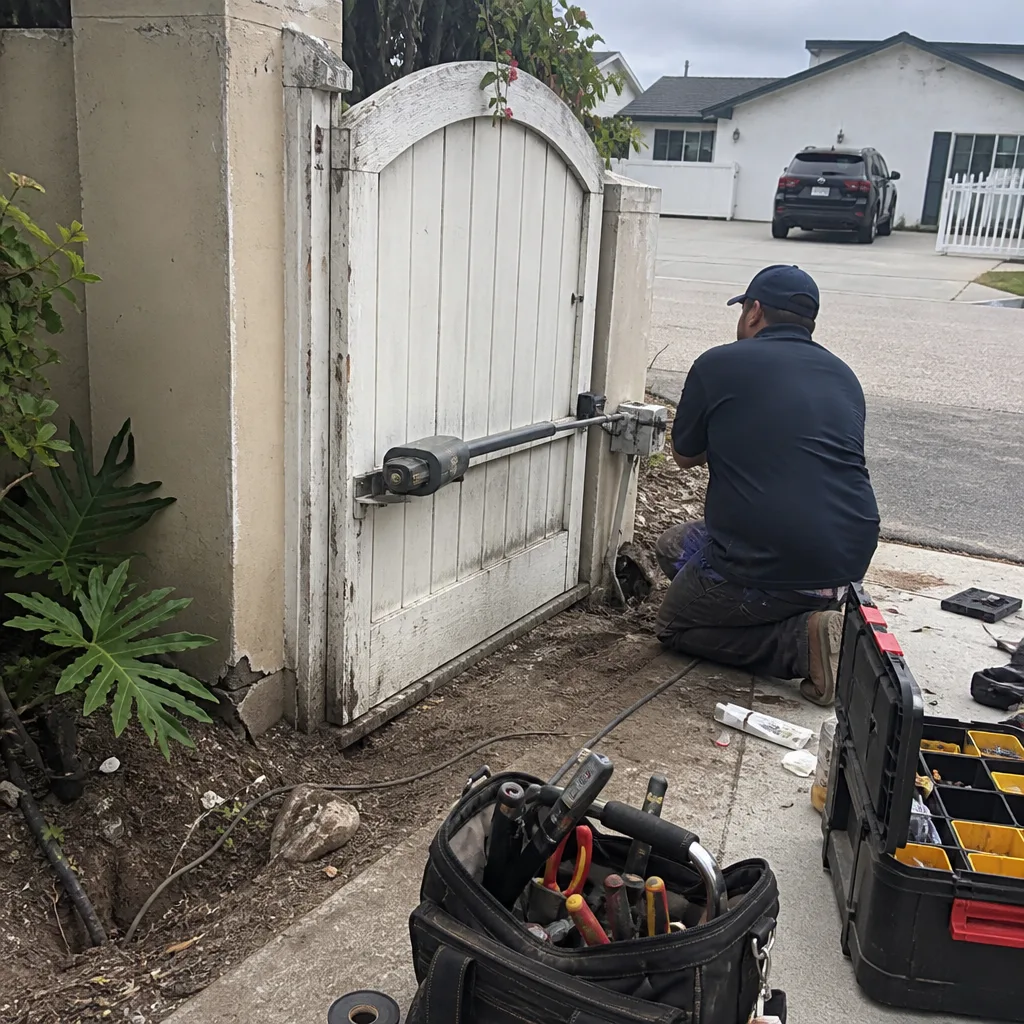 Before
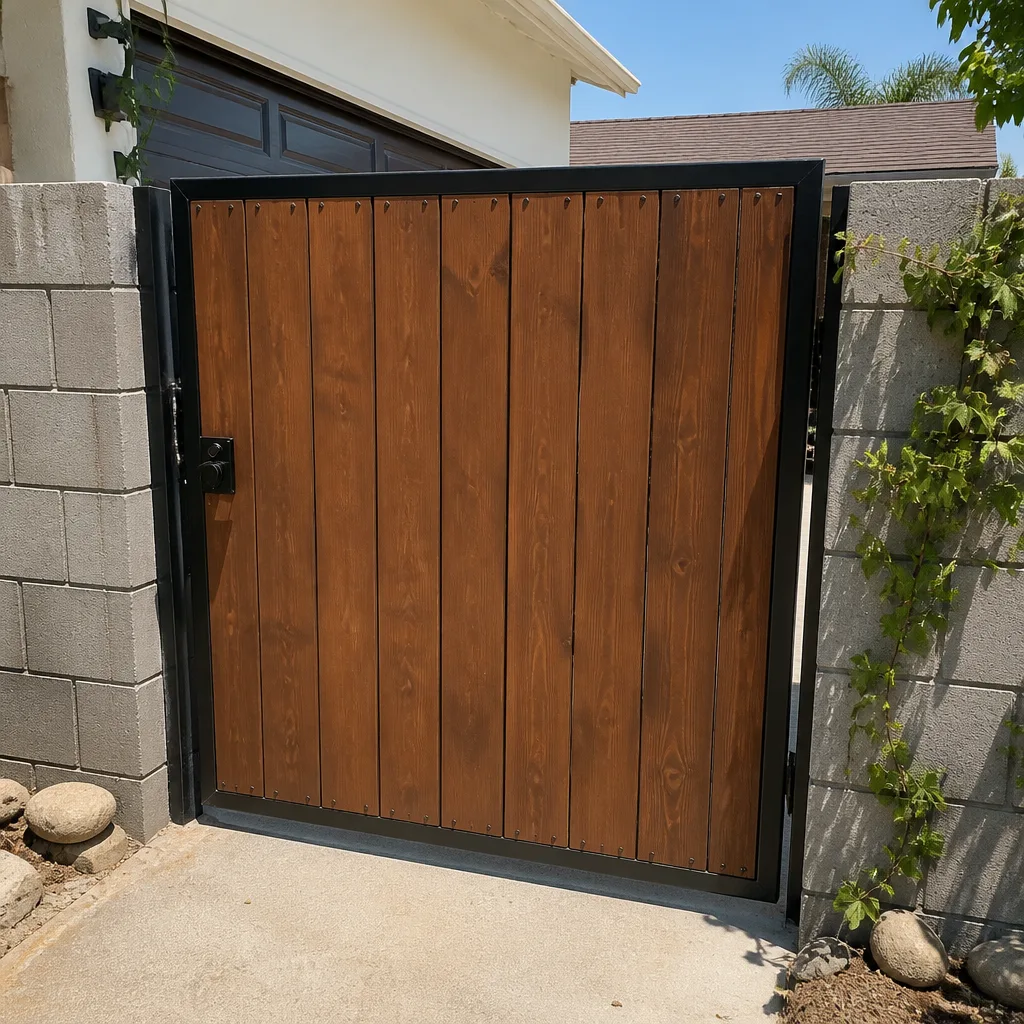 After
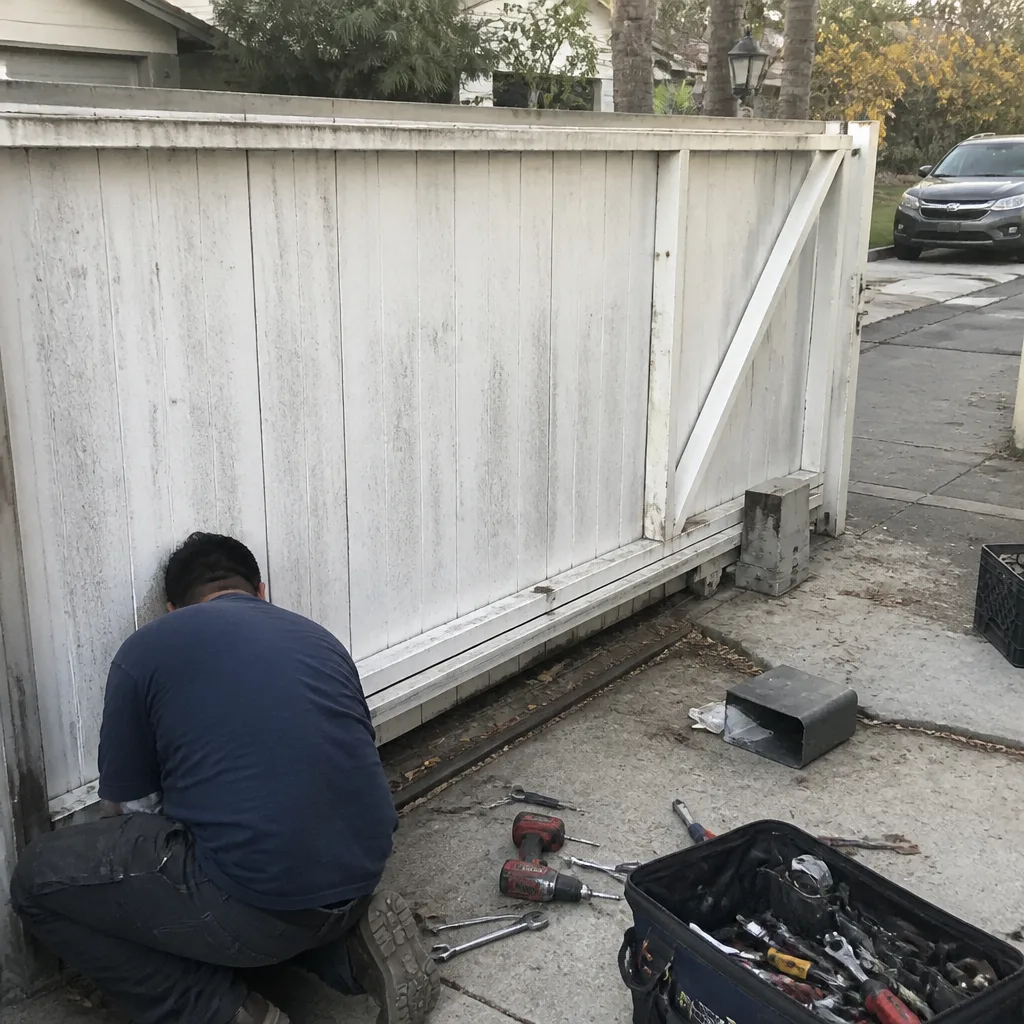 Before
 After
 Before
 After